Last Updated: November 4, 2026
Quick Summary
Heat pumps can be a good alternative to central HVAC because one system handles both heating and cooling by moving heat rather than generating it. They suit homes where a central system is due for replacement, but fit depends on your climate, ductwork, budget and current fuel. A heat pump is most worthwhile when it is correctly sized and installed.
- Heat pumps move heat rather than generate it, and handle both heating and cooling.
- Ground-source units are most efficient but carry the highest upfront cost due to the loop field.
- Ductless mini-splits suit homes without ducts, though whole-home retrofits may need several heads.
- Savings depend on climate, electricity rates, the fuel being displaced, and duct sealing.
- Ask each contractor for a written estimate separating equipment, labor, ductwork and electrical costs.
Table of Contents
- How Heat Pumps Work and Where They Fit
- Types of Heat Pump Systems and Their Trade-Offs
- Energy Efficiency, Utility Costs, and Available Incentives
- Repair vs. Replacement: When an Alternative System Makes Sense
- Finding Heat Pump Companies and Getting Honest HVAC Service Estimates
- Questions to Ask an HVAC Contractor Before You Commit
- Book a Diagnostic Visit to Decide Your Next Step
- Frequently Asked Questions
If your furnace is running longer than it used to and your electric bill keeps climbing, you are not imagining things. Many Illinois homeowners now ask whether a heat pump could replace the separate furnace and air conditioner they have relied on for years. At Giron & Son's Heating & Cooling, we hear that question often from homeowners in Monroe County who want a clear answer before they commit to a new system.
Heat pumps are gaining ground. RMI reports that heat pumps have averaged 3.9 million sales per year this decade, compared with 3.5 million average annual sales of gas furnaces (RMI, Tracking the Heat Pump & Water Heater Market in the United States). That shift suggests more homeowners are considering a single system that handles both heating and cooling.
The core question is whether that alternative fits your home, your budget and your climate. This article walks through how heat pumps work, the trade-offs between system types, what they can save on utility costs, and how to get honest estimates from a contractor.
How Heat Pumps Work and Where They Fit
A heat pump is a heating and cooling system that moves heat rather than generating it (Air-Source Heat Pumps). In cooling mode it pulls heat out of your home. In heating mode it reverses the process and pulls heat from the outdoor air into your home. ENERGY STAR describes heat pumps as serving both heating and cooling and as more efficient than furnaces or boilers, though the result does not give a numerical comparison (ENERGY STAR, Clean Heating and Cooling).
Heat pumps fit homes where one system can replace both a furnace and an air conditioner. They are often a practical choice when a central system is due for replacement anyway. Our team at Giron & Son's Heating & Cooling can help you compare a heat pump against your current setup, and our heat pump versus furnace guide for Illinois homes walks through which option tends to suit local conditions.
Types of Heat Pump Systems and Their Trade-Offs
Heat pumps are not one product. The category splits into several configurations, and the trade-offs between them matter more than brand names when you are deciding whether an alternative system fits your home.
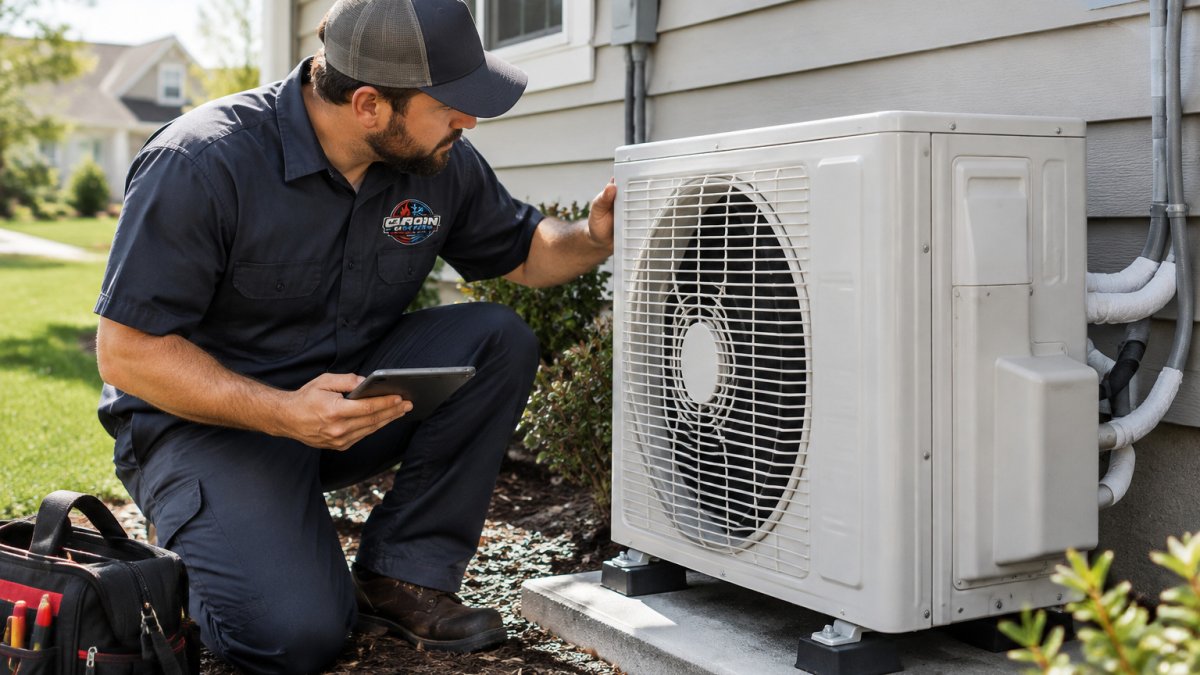
Air-source heat pumps are the most common residential option. They move heat between your home and the outdoor air and can be configured as ducted (connected to existing ductwork), ductless (wall-mounted mini-split heads), or a hybrid of both. Standard air-source units lose capacity as outdoor temperatures drop. Cold-climate air-source heat pumps are designed to keep heating output higher at low temperatures, though efficiency and capacity still decline as it gets colder.
Ground-source (geothermal) heat pumps exchange heat with the ground, where temperatures stay relatively stable year-round. They are the most efficient option on paper but carry the highest upfront cost because of the loop field, horizontal loops need trenching, vertical loops need drilling, and the loop field can rival or exceed the cost of the equipment itself.
Ductless mini-split systems use one or more wall-, floor-, or ceiling-mounted indoor heads connected to an outdoor unit. They suit homes without ducts, additions, garages, and rooms that are hard to zone with a central system. The trade-off is that each head serves a defined area, so a whole-home retrofit may require several heads, and the visual footprint is different from central HVAC.
Ducted vs. ductless is really a ductwork question. A central ducted heat pump depends on the condition of your existing ducts. Leaky, undersized, or poorly sealed ductwork undermines efficiency regardless of how good the equipment is. Sealing, repairing, or resizing ducts can add meaningful cost and time to a project.
Retrofitting costs versus new construction. In new construction, ductwork and electrical are designed around the heat pump from the start. In an existing home, the retrofit reality is different: you may need to upgrade the electrical panel, add a dedicated circuit for the outdoor unit, modify plenum and return-air connections, and address refrigerant line routing.
Sizing and zoning. A heat pump that is oversized can short-cycle and dehumidify poorly, while one that is undersized can struggle on design-temperature days. Sizing should be based on a proper load calculation rather than a rule-of-thumb estimate.
Reliability and lifespan. Installation quality, correct charge, sealed ducts, proper airflow, affects lifespan as much as the equipment brand. Compare the labor warranty, not just the parts warranty, when evaluating options.
Energy Efficiency, Utility Costs, and Available Incentives
Heat pumps can lower energy use compared with older heating equipment, but the honest answer is that savings depend on your home, your climate, your current fuel, and how the system is sized and installed. Rather than quote a savings percentage that will not match your house, it helps to understand the mechanisms and then look at the incentives that change the math.
How the efficiency gain actually happens. A furnace or boiler generates heat by burning fuel; a heat pump moves existing heat. That is why heat pumps can deliver more heating energy than the electricity they consume, expressed as a coefficient of performance (COP) or as heating seasonal performance factor (HSPF2) for air-source units.
What drives your utility bill after the switch. Three variables dominate: your climate (heating and cooling degree days), your electricity rate and rate structure, and whether you are displacing natural gas, propane, fuel oil, or electric resistance heat. Displacing electric resistance or fuel oil typically produces the largest bill reduction; displacing inexpensive natural gas can produce a smaller one, and in some rate structures a modest increase during cold snaps. Time-of-use electric rates, common in many utility territories, reward shifting heavy heating and cooling loads to off-peak hours, a variable-speed heat pump paired with a smart thermostat can take advantage of that.
Federal incentives. Federal and state incentives for heat pumps change over time, and their availability and amounts can vary by state and household income. Confirm current terms with the IRS and your state energy office before relying on any figure. Because credit percentages, caps, and program status are updated periodically, confirm current terms with the IRS and your state energy office before you rely on a number in your budget.
State and utility rebates. Utility and state heat pump rebates vary by territory, so check your state energy office's listing directly for current availability.
Stacking incentives. Federal credits, state rebates, and utility rebates can often be combined, but the rules on what can be stacked with what are specific and change. Keep the itemized invoice and the equipment model and efficiency ratings, as rebate programs often require them.
How to compare estimates fairly. Ask each contractor for a written estimate that separates equipment, labor, permits, ductwork, electrical work, and any warranty extensions, and that notes which incentives they have already accounted for. A bid that shows a lower net price because it assumes a rebate you may not qualify for is not a lower bid. Compare the gross price and the assumed incentives side by side.
Incentive programs can have deadlines, funding caps, and efficiency thresholds, so confirm current terms before you sign.
The article's key points on what drives heat pump savings and how to compare estimates fairly are summarised below.
| Factor | What it affects | Why it matters |
|---|---|---|
| Climate | Heating and cooling load | Drives how much energy the system uses |
| Electricity rate structure | Bill after switching | Time-of-use rates reward off-peak use |
| Fuel being displaced | Size of bill change | Oil or electric resistance gives largest reduction |
| Duct sealing and sizing | Real-world performance | Leaky ducts cut output below the rating |
| Written estimate | Fair comparison | Separates equipment, labor, ductwork and electrical costs |
| Incentive assumptions | Net price | Confirm rebates before counting them as savings |
Repair vs. Replacement: When an Alternative System Makes Sense
Not every failing system needs replacing. Repair often makes sense when the unit is relatively young, the fix is inexpensive, and the rest of the equipment is sound. Replacement becomes more worth considering when repairs are frequent, the system is near the end of its service life, or the equipment is inefficient by today's standards.
Warning signs that a system is failing include weak airflow, uneven temperatures between rooms, strange noises and rising energy bills. Our guide on signs your HVAC system is failing explains what each symptom usually points to. A furnace with a cracked heat exchanger, for example, is a safety problem and should be evaluated promptly. Our guide on why a furnace may need repair rather than replacement covers when repair is the smarter choice.
Finding Heat Pump Companies and Getting Honest HVAC Service Estimates
Start by asking several contractors for written estimates that list equipment, labor, permits and warranty terms. Compare the scope of work, not just the total. A low bid that leaves out ductwork changes or electrical upgrades may cost more later.
Ask whether the contractor performs a diagnostic before recommending replacement. Learn what a diagnostic visit typically involves and what it costs in our article on residential HVAC diagnostic pricing. If you are ready to compare replacement options for Monroe County, see our HVAC system replacement options page.
Questions to Ask an HVAC Contractor Before You Commit
Before you sign anything, ask a few direct questions:
- Will you diagnose the problem and explain whether a repair can solve it?
- Can you give me a written estimate before work begins?
- Which equipment do you recommend, and why does it fit my home?
- What warranty covers the parts and the labor?
- How quickly can you schedule the work, and what happens if the technician runs late?
A reputable contractor will answer these plainly. Be cautious of any company that refuses to give a written estimate or pushes replacement before inspecting the system.
Book a Diagnostic Visit to Decide Your Next Step
Deciding between repair, replacement and a heat pump is easier once you know what is actually wrong. At Giron & Son's Heating & Cooling, we are a veteran-owned company serving Monroe County and nearby Illinois communities. We focus on clear communication and solid diagnostics, and we start with a repair-first approach when it makes sense for your system. You can schedule online or contact us directly to get a straightforward assessment of your options.
Frequently Asked Questions
Are heat pumps a good alternative to a furnace and air conditioner?
For many homes, yes. A heat pump handles both heating and cooling in one system. Performance depends on climate, home insulation, and sizing, so a load calculation from a licensed contractor is the best way to confirm fit before buying.
When should I repair my HVAC system instead of replacing it?
Repair usually makes sense when the unit is relatively young, the problem is isolated to one part, and the repair cost is a small fraction of replacement. Replacement becomes more reasonable when the system is near the end of its lifespan, needs frequent fixes, or is inefficient by today's standards. Ask your contractor to explain the repair and replacement options side by side with written estimates.
How do I compare heat pump companies?
Start by confirming the contractor is licensed and insured, and ask for references from recent installations. Compare written estimates that list the equipment brand, model, efficiency ratings such as SEER and HSPF, warranty terms, and what the price includes. A brand matters less than correct sizing and installation.
What should I ask an HVAC contractor before hiring them?
Ask whether they will perform a load calculation before recommending equipment, whether the estimate is written, and what the warranty covers for parts and labor. Confirm the diagnostic fee, if any, before the visit, and ask how quickly they can schedule service. Clear answers to these questions usually indicate a contractor who communicates well.
