Last Updated: November 24, 2026
Quick Summary
A veteran owned HVAC company can bring habits like discipline, following procedures, and accepting responsibility for results, which homeowners may value. Ownership alone does not guarantee quality, so verify licensing, insurance, written warranty terms, and compare estimates before you hire.
- Veteran-owned businesses generate more than $1 trillion in total revenue each year, according to the U.S. SBA Office of Advocacy.
- Verify a contractor's state license number through your state's licensing board or contractor registration database.
- Ask any contractor for documentation of veteran ownership, such as a certification or business registration records.
- Compare at least three written estimates using the same scope, including parts, labor, and warranty terms.
- Ask whether a veteran discount applies to parts, labor, or both, and get it itemized on the written quote.
Table of Contents
- What Are the Benefits of Hiring a Veteran-Owned HVAC Company?
- Discipline, Accountability and Precision in HVAC Work
- How to Choose an HVAC Contractor You Can Trust
- HVAC Contractor Questions to Ask Before You Book
- HVAC Repair Estimate Checklist: What a Fair Quote Includes
- Veteran HVAC Discounts, Eligibility and Assistance Programs
- Booking Your Next Service Visit With Giron & Son's
- Frequently Asked Questions
What Are the Benefits of Hiring a Veteran-Owned HVAC Company?
A veteran owned hvac company is one example of how veteran-owned businesses are a meaningful part of the American economy. According to the U.S. Small Business Administration Office of Advocacy, Veteran Ownership Statistics 2026, veteran-owned businesses generate more than $1 trillion in total revenue each year. At Giron & Son's Heating & Cooling, we know that the business's ownership is only part of the story. What matters to a homeowner is how the work gets done.
Veteran ownership can signal certain habits. Many veterans carry training in discipline, following procedures, and accepting responsibility for results. Those habits can show up in how a technician arrives on time, documents a repair, and explains what went wrong. That is a reasonable expectation, but it is not a guarantee. Research on this topic is still limited. A University of Illinois study on veteran-owned small businesses and service
Here are the practical benefits homeowners typically look for:
- Clear accountability. Ask who will answer if the repair fails in six months, and what the written terms say about it.
- Consistent process. Ask any contractor to walk you through how they inspect, diagnose, explain and quote a job before work begins.
The honest caveat: ownership status does not replace checking credentials, reading reviews, or comparing quotes.
Discipline, Accountability and Precision in HVAC Work
Ask a homeowner what they want from an HVAC technician and you will hear the same three things: show up, fix the problem, and tell me the truth.
Precision matters most during diagnostics. A system that is short on refrigerant, has a failing capacitor, or has a clogged coil can produce similar symptoms, so guessing can waste money. A careful technician measures before recommending a fix.
Accountability shows up after the visit. Ask any contractor whether they stand behind their labor and what the warranty covers. Written terms are better than verbal promises.
Watch out: Be wary of any contractor who recommends a full replacement before running basic tests. Ask to see the measurements behind the recommendation.
How to Choose an HVAC Contractor You Can Trust
Trust is built on verifiable facts, not slogans. Use this section as a practical comparison framework when you look at any veteran owned hvac contractor: confirm credentials, verify ownership claims, and compare written terms side by side.
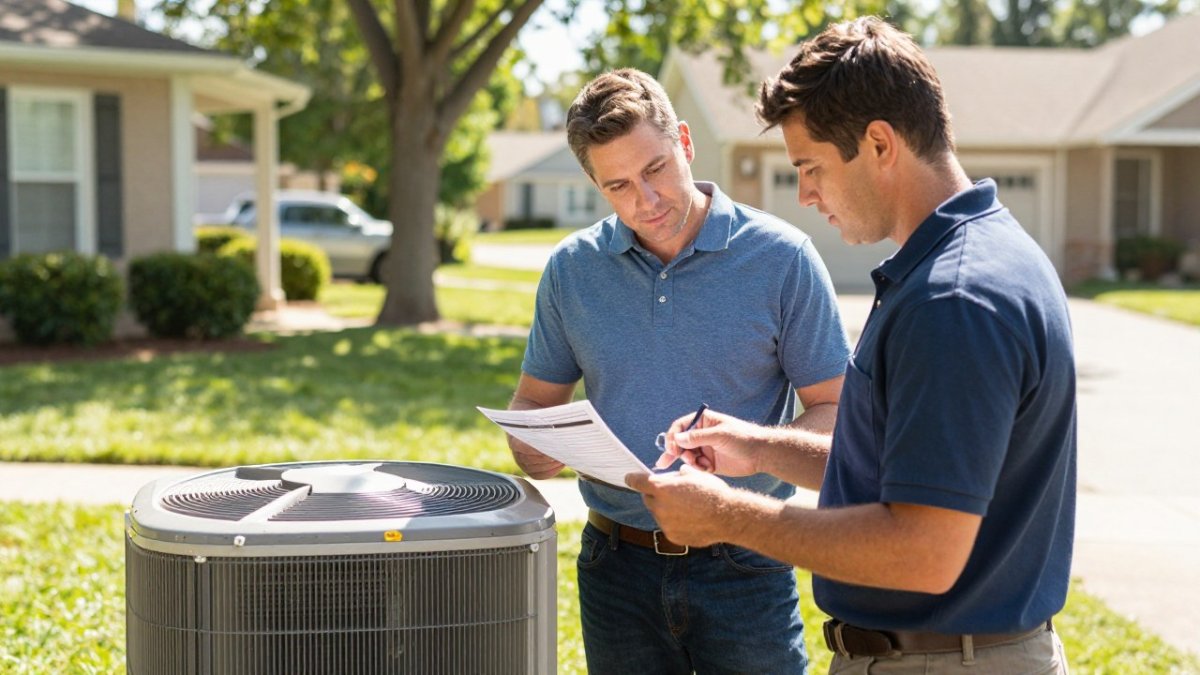
1. Confirm licensing, insurance, and registration. Ask for the contractor's state license number and verify it through your state's licensing board or contractor registration database. Request a certificate of insurance showing general liability and workers' compensation coverage, and call the insurer to confirm the policy is active. A legitimate contractor will provide these without hesitation.
2. Verify veteran-owned status when it is part of the pitch. Ask any contractor for documentation of ownership. Common forms include a business registration or operating agreement that lists veteran ownership, a state or local veteran-owned business certification, or a federal certification such as the SBA's Veteran-Owned Small Business (VOSB) or Service-Disabled Veteran-Owned Small Business (SDVOSB) status where applicable. Check the company's state business registration records and, if a certification is claimed, ask for the certificate or a verification link. Be cautious of any company that uses veteran status in marketing but cannot show records when asked.
3. Check technician credentials. Ask whether technicians hold NATE certification or manufacturer-specific training, and whether the company runs background checks and drug testing. Certification alone does not guarantee quality, but it shows a baseline of tested knowledge.
4. Compare at least three written estimates using the same scope. Give each contractor the same information about your system and the same request. Estimates that list equipment brands, model numbers, labor hours, permit responsibility, and warranty terms are easier to compare than a single verbal number. Ask each contractor the same questions so you can compare answers directly.
5. Review warranty and labor terms in writing. Ask what the labor warranty covers, how long it lasts, and whether it is prorated. Confirm whether the warranty is tied to annual maintenance and what voids it. Get the terms in the contract, not just in conversation.
6. Confirm permits and code compliance. For replacement work, ask who pulls the permit and whether the final inspection is included. Unpermitted work can complicate insurance claims and resale.
7. Know your consumer-protection options. Many states have rules for written home-improvement contracts and cancellation rights, so check the rules where you live. Keep copies of the contract, estimates, and warranty documents. If a dispute arises, contact your state attorney general's consumer protection division or your local consumer affairs office. The FTC's consumer guidance on home repair can help you spot unclear terms.
Watch out: A contractor who cannot or will not provide a license number, insurance certificate, or written warranty terms is a risk regardless of ownership status. Verify first, then compare.
HVAC Contractor Questions to Ask Before You Book
Before you schedule a visit, a short list of questions will reveal a lot about the company:
- Is there a fee for the diagnostic visit, and does it apply toward the repair if you approve the work?
- Will the technician explain the problem and show you the failed part?
- What does the warranty cover, for parts and for labor, and for how long?
- Do you offer financing, and what are the interest terms?
- How quickly can you respond to an emergency call, and what are after-hours charges?
- Can you show me the measurements that support your recommendation?
A reputable contractor answers these without hesitation. Vague answers are a warning sign. For the warning signs of overcharging before you book, see signs your HVAC technician may be overcharging you.
HVAC Repair Estimate Checklist: What a Fair Quote Includes
A fair repair quote is specific. Use this checklist when you compare estimates:
- Itemized parts with part numbers or model details
- Labor charges, stated as a flat rate or hourly rate
- Diagnostic or service-call fee, and whether it is credited toward the repair
- Refrigerant or other materials, listed separately
- Warranty terms for both parts and labor
- Payment schedule and any financing charges
- Estimated completion date
Pricing depends on the equipment, the repair and local conditions, so we do not publish fixed prices for every job. To learn how to get quick HVAC repair quotes, compare them fairly, and spot hidden fees, see how to get quick HVAC repair quotes. For current pricing, contact Giron & Son's Heating & Cooling directly. A consumer guidance on reviewing home repair estimates can also help you spot unclear terms.
Use these items to check whether an estimate is complete enough to compare fairly. To see what a residential HVAC diagnostic typically costs and whether it applies toward repairs, read average cost of a residential HVAC diagnostic.
| Quote item | What to look for | Why it matters |
|---|---|---|
| Parts | Itemized, with part numbers or model details | Lets you compare the same scope |
| Labor | Flat rate or hourly rate, stated | Shows how the total was built |
| Diagnostic fee | Whether it is credited toward the repair | Affects your total if you approve the work |
| Refrigerant or materials | Listed separately | Prevents hidden add-ons |
| Warranty | Terms for parts and labor | Defines what happens after the job |
| Payment and financing | Schedule and any financing charges | Shows the full cost over time |
| Completion date | Estimated date stated | Sets clear expectations |
Veteran HVAC Discounts, Eligibility and Assistance Programs
Discounts for veteran and military customers vary widely, and the terms matter as much as the percentage. Use this section to understand common structures, confirm eligibility, and avoid surprises.
Common discount structures. Discounts for veterans and military customers can take different forms, such as a percentage off a service fee or a flat dollar amount. Read the terms before you assume a discount applies to your situation.
Who qualifies and what proof is required. Eligibility often includes active-duty military, veterans, reservists, and sometimes immediate family members or surviving spouses. Proof typically means a military ID, a DD-214, a VA identification card, or enrollment in a VA health care or benefits program. Ask which documents the company accepts and whether the discount applies at the time of booking or only at payment.
Stacking and exclusions. Ask whether the discount can be combined with other offers, such as seasonal promotions, maintenance-plan pricing, or manufacturer rebates. Many companies exclude replacement work, permit fees, or already-discounted services. Confirm whether the discount applies to parts, labor, or both, and whether it is applied before or after tax.
Assistance programs outside the contractor. Nonprofit and government programs can help eligible veterans with HVAC repair or replacement costs. Nonprofit and government programs can sometimes help eligible veterans with home repairs, so check directly with the organizations or agencies involved. Eligibility rules, funding availability, and application processes vary, so check directly with the organization or agency before you plan around that help. Keep in mind that assistance is typically needs-based and may require documentation of income and veteran status.
How to compare discount offers. Ask each contractor the same questions: What percentage or dollar amount is offered? Which services does it cover? What proof is required? Can it be combined with other offers? Is it applied to parts, labor, or both? A smaller discount with fewer exclusions can be worth more than a larger headline percentage that does not apply to your job.
Watch out: A discount that is advertised but not documented in the written estimate is not a discount you can count on. Ask for any discount to be itemized on the quote before you approve the work.
Booking Your Next Service Visit With Giron & Son's
If you are ready to book, Giron & Son's Heating & Cooling provides residential service in Monroe County and surrounding communities. You can review our heating and cooling services in Belleville, IL, including AC repair, furnace repair, diagnostics, maintenance and replacement options. When you are ready to request a visit, you can use online scheduling to choose a time that works for you.
As a veteran-owned business, we focus on clear communication, solid diagnostics and honest workmanship. Use the checklist above to compare any contractor, including us. Our goal is to earn your trust with straight answers and work that holds up over time.
Frequently Asked Questions
Can veterans get a free HVAC system?
Some veterans can receive help, but free systems are not a standard benefit. Some nonprofit groups offer assistance to veterans, but eligibility and availability vary. Contact the organization directly to ask about current eligibility, application steps and timing before planning around any free system.
Will the VA pay for HVAC repairs or replacement?
The research supplied for this article does not confirm that the Department of Veterans Affairs pays for routine HVAC repairs or replacements for homeowners. Veterans who are facing a heating or cooling failure should ask the VA about any housing-related benefits they may qualify for, and separately ask nonprofit groups like Operation Homefront about assistance. Get an itemized estimate from your HVAC contractor so you know the exact cost to cover.
Do HVAC companies offer discounts to veterans?
Some do, but discounts vary by company. Some HVAC companies offer veteran discounts, but terms such as qualifying services, documentation and exclusions are not always listed. Ask any contractor to confirm the discount in writing before the visit.
How can I verify that an HVAC company is veteran-owned?
Start with the company's own disclosures, then check independent records. Ask for the owner's name and military service details, look for the claim on state business registrations and on the company's website, and review local news or award coverage. Be cautious of claims that are only made in marketing. A veteran-owned label should be backed by verifiable ownership information you can confirm before you rely on the discount or service promise.
