Last Updated: November 14, 2026
Quick Summary
The most common signs of a hvac technician overcharging you appear in the paperwork and the conversation before any work starts. Watch for no price range, charges never discussed, pressure to decide on the spot, vague part names, and work approved before the diagnosis is shown. Ask for a written, itemized estimate and read every line before approving anything.
- A single red flag doesn't prove dishonesty, but several together are a reason to slow down.
- Request a written, itemized estimate listing labor hours, part model numbers, and the diagnostic fee.
- Ask whether the diagnostic fee is credited toward the repair if you proceed.
- Collect two or three written quotes and compare labor and parts separately.
- Don't sign for a replacement system in a rush; take the quote home and get another opinion.
Table of Contents
- Warning Signs of Overpriced or Dishonest HVAC Service
- How to Read an HVAC Repair Estimate Line by Line
- Pressure Tactics, Urgency, and Upselling Unrelated Repairs
- HVAC Refrigerant Overcharge Symptoms vs. an Inflated Repair Bill
- Questions to Ask an HVAC Technician Before You Approve Work
- When to Get a Second Opinion on an HVAC Repair
- Booking a Transparent Diagnosis With Giron & Son's Heating & Cooling
- Frequently Asked Questions
Warning Signs of Overpriced or Dishonest HVAC Service
Homeowners in Monroe County and surrounding Illinois communities often suspect HVAC technician overcharging after a price doesn't match the work performed. Knowing the warning signs before a technician starts work is the best protection. Most overcharging shows up in the paperwork and the conversation long before it shows up on a bill.
Watch for these red flags:
- The technician won't give a price range before starting work.
- Charges appear on the bill that were never discussed.
- The company pushes you to decide on the spot without time to think.
- The technician won't explain the problem in plain terms.
- The estimate arrives verbally only, with nothing in writing.
- The technician claims an emergency that you can check for yourself.
- Parts are described with vague names instead of model numbers.
- You're told the problem is "worse than it looks" with no evidence.
- The company asks you to approve work before showing you the diagnosis.
A single flag doesn't prove dishonesty. Several together are a reason to slow down and ask questions.
Use this table to scan the main red flags that suggest an HVAC quote or technician may be overcharging you.
| Red flag | What it may mean | What to do |
|---|---|---|
| No price range before work starts | Costs were never agreed | Ask for a range in writing |
| Charges never discussed | Bill includes unapproved items | Question each line item |
| Pressure to decide on the spot | Avoids scrutiny of the quote | Take time to think |
| Vague part names | Parts cannot be verified | Ask for model numbers |
| Emergency you cannot check | Creates false urgency | Ask for evidence |
| Work approved before diagnosis | You pay before knowing the problem | Ask to see the diagnosis first |
| Estimate given only verbally | Nothing to compare or dispute | Request a written estimate |
How to Read an HVAC Repair Estimate Line by Line
A written, itemized estimate is your best tool. Ask for one before any work begins, and read every line. A clear estimate should list labor hours, each part with its part number, any diagnostic or service fee, and the total. Ask whether a diagnostic fee is applied to the repair if you proceed.
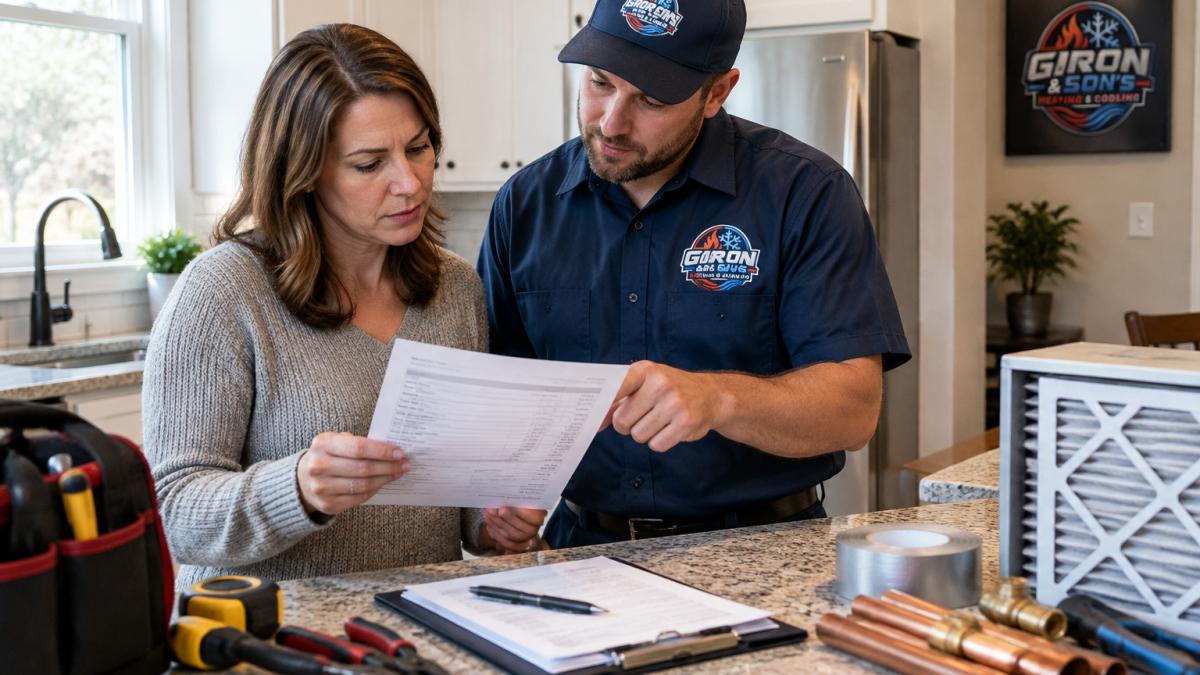
Use this quick checklist as you review the estimate:
- Labor: Does it show hours and an hourly rate, or a flat fee with a clear scope?
- Parts: Does each part have a name and model number you can look up?
- Diagnostic fee: Is it stated, and is it credited toward the repair?
- Taxes and extras: Are they listed separately so you can see them?
- Total: Does it match the sum of the lines above?
If a line item is unclear, ask the technician to explain it in writing. A reputable company will answer without fuss.
How to Compare a Quote With Local Market Rates
Reading the lines is only half the job. The other half is judging whether the numbers are in line with what other contractors in your area charge for similar work.
A practical way to do this:
- Collect two or three written quotes for the same diagnosis. Ask each contractor to itemize labor, parts, diagnostic fee, and refrigerant charges separately so you are comparing like with like.
- Separate labor from parts. Labor and parts are often priced differently, so ask each contractor to break them out. A quote that is high on both is worth questioning; a quote that is high on one may simply reflect a different business model.
- Check the diagnostic fee against the going rate. Diagnostic fees vary by company, so ask each contractor what their diagnostic fee covers and whether it is credited toward the repair.
- Ask what the refrigerant charge includes. Refrigerant is often billed by the pound, so ask for the quantity and rate. Ask for the number of pounds, the price per pound, and whether recovery and disposal are included.
- Compare flat-fee and hourly quotes carefully. A flat fee can be fair if the scope is clear, but it is harder to audit. Ask what happens if the job takes less time than estimated.
Watch out: A low quote is not automatically the honest one. Compare the total cost of the diagnosis plus the recommended repair, not just the first number you see.
If a line item or a total still looks out of step with the other quotes, ask the technician to walk you through how the price was built.
Pressure Tactics, Urgency, and Upselling Unrelated Repairs
Pressure to act on everything right now is a different matter. A common tactic is to present a minor issue as a looming disaster so you agree to expensive work you didn't plan for.
Watch for these signs:
- Repeated claims that the system will fail "tonight" without evidence.
- Recommendations for work that has nothing to do with the original problem.
- Offers of "special pricing" that expire today.
Watch out: Don't sign an agreement for a replacement system while you're in a rush. Take the written quote home and compare it with at least one other opinion.
HVAC Refrigerant Overcharge Symptoms vs. an Inflated Repair Bill
These two issues are often confused, so it helps to separate them. A refrigerant overcharge is a technical fault in how much refrigerant is in your system. It can cause poor cooling, unusual pressures, and compressor strain.
A technician can have a real refrigerant issue and still engage in hvac technician overcharging when fixing it. Ask the technician to show you the pressure readings and explain what they mean. Legitimate diagnostics come with evidence, such as gauge readings, temperature measurements, and an explanation of what was found and why it needs fixing.
Questions to Ask an HVAC Technician Before You Approve Work
Asking the right questions before approving work protects you. You don't need to be an expert to ask them.
Use this list:
- What exactly is wrong, and how did you confirm it?
- Can you show me the readings or the broken part?
- What are my options, including the lowest-cost repair?
- Is the diagnostic fee applied to the repair if I proceed?
- Can you put the full estimate in writing?
- What warranty covers the parts and the labor?
- Is this repair urgent, or can it wait for a second opinion?
A technician who answers these clearly is usually easier to trust. Pay attention to answers that are vague or that dodge the question.
When to Get a Second Opinion on an HVAC Repair
Get a second opinion when the repair is expensive, when the recommended fix is replacement instead of repair, or when the diagnosis doesn't match what you're seeing. A second look can help confirm whether a repair is workable or whether replacement is really needed.
A Step-by-Step Response When a Quote Seems Suspicious
If something about the quote feels off, you do not have to decide on the spot. Work through these steps in order:
- Pause the work. Tell the technician you need time to review the estimate before authorizing anything beyond the diagnosis. A company that pressures you to keep going is giving you useful information about how it does business.
- Request an itemized written estimate. Ask for labor hours and rate, each part with its model number, the diagnostic fee, refrigerant charges by pound, and the total. Keep a copy for your records.
- Ask for the diagnosis in writing. Request the readings, test results, and a plain-language explanation of what failed and why the recommended repair addresses it. Photos of the failed part or of gauge readings are reasonable to ask for.
- Document everything. Save the written estimate, any texts or emails, the invoice, and notes on what was said and when. This record matters if you later need to dispute a charge or file a complaint.
- Get a second opinion before approving major work. For a repair or replacement that is a significant expense, have another licensed contractor inspect the system and give you a written assessment. Do not tell the second contractor what the first one recommended until after they have looked at the system themselves.
- Check licensing and warranty terms. Confirm the contractor's license is active and ask what the parts and labor warranty covers. Warranty terms can affect whether a repair or a replacement is the better financial choice.
- Know where to escalate. If you believe you were overcharged or misled, start with the company in writing. If that does not resolve it, consumer protection resources in your state and local contractor licensing boards are common places to file a complaint (How To Avoid a Home Improvement Scam). Requirements and remedies vary by jurisdiction, so confirm the process that applies where you live.
Watch out: Do not authorize a replacement system while you are in a rush or feeling pressured. Take the written quote home, compare it with at least one other opinion, and give yourself time to check the numbers against the steps above.
If you're weighing a repair against a new system, compare your options on cost, expected lifespan, and efficiency. Our heat pump vs furnace guide for Illinois homes walks through how each system performs in cold weather, which helps when you're deciding whether a repair is worth it. For a fair comparison of quotes, our guide to getting HVAC repair quotes explains what to check and which hidden fees to watch for.
If you've been told to replace your system, you can also compare replacement options for homes in Monroe County before you commit.
Booking a Transparent Diagnosis With Giron & Son's Heating & Cooling
At Giron & Son's Heating & Cooling, we believe you should understand your diagnosis before you pay for work.
If something feels off with a recent quote, you can learn about the typical cost of an HVAC diagnostic to compare it with what you've been offered. Book online or contact us today to get your system checked the honest way.
Giron & Son's Heating & Cooling provides dependable residential HVAC service in Monroe County and surrounding Illinois communities. Schedule online and get a clear answer before any work begins.
Frequently Asked Questions
How can I tell if an HVAC technician is overcharging me?
Compare the written estimate against the work actually performed. Itemized quotes that list labor hours, each part with its price, and any diagnostic fee are easier to verify than a single lump sum. Be cautious if the total rises after work begins without written approval, or if the technician cannot explain why a part or labor charge is needed. Asking for the old parts back and requesting a second opinion are reasonable steps before you pay.
What should an HVAC repair estimate include?
A complete HVAC repair estimate should list the diagnosed problem, each recommended repair, the cost of parts, labor charges, any diagnostic or service call fee, sales tax, and the warranty on parts and labor. It should be in writing and signed before work begins. If an estimate is vague or only gives a total, ask for an itemized version so you can compare it with other quotes.
Should I get a second opinion on an HVAC repair?
A second opinion is worthwhile when a repair is expensive, when the recommended fix is a full system replacement, or when the diagnosis does not match the symptoms you have noticed. Another licensed technician can confirm the problem and price the repair independently. A second quote can help you decide whether the first recommendation is justified.
What does it mean when my HVAC system is overcharged with refrigerant?
Refrigerant overcharge means too much refrigerant is in the sealed system, which can raise head pressure, reduce cooling efficiency, and strain the compressor. It is a technical condition that a technician should confirm with gauge readings and system measurements, not a billing issue. A proper diagnosis should show the pressure and temperature data behind any refrigerant recommendation, and you can ask to see those readings before approving a charge.
