
Table of Contents
- Why a Monroe County Illinois HVAC Tune Up Matters Before the Season Turns
- The Homeowner's HVAC Tune-Up Checklist: What a Technician Actually Does
- Seasonal Timing and How Often to Schedule Preventive Maintenance
- How Long Does an HVAC Tune-Up Take, and What Does It Include?
- Signs Your System Needs Service Before the Next Season
- Questions to Ask an HVAC Contractor Before You Book
- What an HVAC Maintenance Plan Covers and When It Pays Off
- Frequently Asked Questions
Last Updated: October 21, 2026
Why a Monroe County Illinois HVAC Tune Up Matters Before the Season Turns
A Monroe County Illinois HVAC tune up is the cheapest way to avoid a mid-January furnace failure or an August air conditioner that quits on the hottest weekend of the year.
Here's what most homeowners get wrong: a tune-up isn't a luxury add-on you book when something sounds off. It's a diagnostic appointment that catches small problems while they're still cheap.
Heat exchangers are the exception worth naming. A cracked heat exchanger can let carbon monoxide into your living space, and no homeowner can see one.
Below: what a technician does, how long it takes, what to ask before you book, and when a maintenance plan earns its keep.
The Homeowner's HVAC Tune-Up Checklist: What a Technician Actually Does
An HVAC tune-up is a structured inspection and adjustment visit covering the furnace, the air conditioner, or both, depending on the season. It combines cleaning, testing, tightening, and measuring, and ends with a written report.
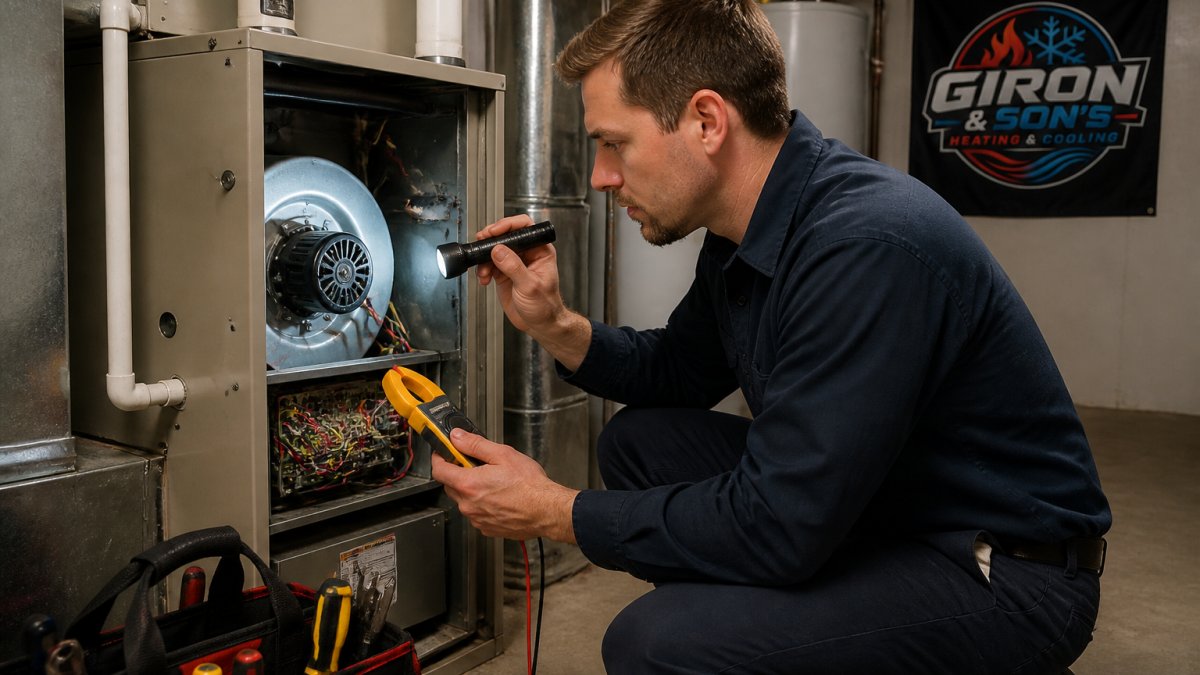
A common mistake is assuming a tune-up means "someone looked at it." Ask for the checklist. Any reputable provider will hand one over before the visit.
Furnace Tune-Up Steps for the Heating Season
- Inspect and clean the burners and flame sensor
- Check the heat exchanger for cracks or corrosion
- Test the igniter and confirm ignition sequence
- Measure gas pressure against the manufacturer's spec
- Lubricate moving parts and check the blower motor
- Inspect the flue and venting for blockages
- Test safety switches and the carbon monoxide response
- Replace or clean the air filter
- Verify thermostat calibration and cycle times
Air Conditioner Tune-Up Steps for the Cooling Season
- Clean the condenser coil and clear debris from the unit
- Check refrigerant charge using superheat and subcooling
- Test the capacitor and contactor
- Inspect and tighten electrical connections
- Measure airflow and static pressure
- Clear the condensate drain line
- Check the compressor and fan motor draw
- Confirm thermostat operation in cooling mode
Seasonal Timing and How Often to Schedule Preventive Maintenance
Schedule preventive maintenance once a year per system: the furnace in early fall, before the first cold snap, and the air conditioner in spring, before the first stretch of heat. Heat pumps need two visits, one ahead of each season.
Timing matters because of the calendar. In fall, crews fill up fast once frost shows in the forecast; book in late summer and you get your pick of appointment windows instead of whatever's left.
Fall maintenance also buys time: a furnace that fails its first cold-start test in October leaves room to order parts. The same failure in January means an emergency call and a cold house.
How Long Does an HVAC Tune-Up Take, and What Does It Include?
A standard residential tune-up takes roughly one to two hours for a single system, longer if the technician finds something. A combined furnace and air conditioner visit usually runs two to three hours.
What's included varies by provider, so ask directly. A thorough visit covers cleaning, testing, adjustment, and a written summary. A thin one covers a filter change and a look at the unit.
| Visit Type | Typical Duration | What It Covers |
|---|---|---|
| Furnace tune-up only | 1 to 2 hours | Burners, heat exchanger, ignition, safety switches, filter |
| AC tune-up only | 1 to 2 hours | Coil cleaning, refrigerant charge, electrical, drain line |
| Both systems, same visit | 2 to 3 hours | Full checklist on heating and cooling equipment |
| Tune-up plus repair | Varies with the part | Everything above plus the diagnosed fix |
What a Tune-Up Typically Costs, and What Drives the Price
Pricing for a tune-up varies by provider and the scope of work. Those are starting prices, not final bills, and that gap is where homeowners get surprised.
A low headline price usually buys limited scope: a filter change, a visual once-over, and a checklist with most boxes blank. The full-scope visit, measuring gas pressure, checking refrigerant charge by superheat and subcooling, photographing the heat exchanger, costs more because it takes longer and uses real instruments.
Expect these items to sit outside a base tune-up price:
- Refrigerant. If the charge is low, adding refrigerant is billed by the pound and is never included in a tune-up price. A system that needs refrigerant also has a leak, which is a separate diagnostic.
- Parts. Capacitors, contactors, igniters, and flame sensors are commonly replaced during a tune-up. The part and the labor are extra, and a provider should quote both before installing anything.
- Filters. Some visits include a standard filter; many don't, and specialty or high-MERV filters are almost always extra.
- Diagnostic fees. Ask whether a service call fee applies on top of the tune-up price, and whether it's waived if you approve a repair.
- After-hours and weekend scheduling. Evening and weekend appointments often carry a premium.
How to Read a Tune-Up Special
A promotional price is a legitimate way to get a technician to your door, but treat it as an entry point, not a total. Before booking, confirm four things: whether the price covers one system or both, whether a filter is included, whether the diagnostic fee is separate, and whether the price changes for older or hard-to-reach systems.
Signs Your System Needs Service Before the Next Season
Book service if you notice rising energy bills with no change in habits, uneven room temperatures, a furnace that short-cycles, strange smells at startup, or a system that takes longer to reach the thermostat setting than it used to.
Noise is the other signal. Rattling, grinding, or a persistent squeal usually points to a mechanical issue that gets more expensive the longer it runs.
Water around the indoor unit, ice on the outdoor unit's lines, or a thermostat that reads a temperature the house clearly isn't at all deserve a call. None of these fix themselves, and two of them can cause damage beyond the equipment.
Questions to Ask an HVAC Contractor Before You Book
Ask four things before you book: what the tune-up includes, whether the price is quoted upfront, how the provider handles repair recommendations, and whether the technician is certified. The answers tell you more than any review count.
With an older system, the honest question is whether it can be repaired at all. A repair-first provider will say what's fixable and put a replacement estimate in writing if that's the real answer.
- "Can you give me a price before you arrive?" A provider that won't quote a routine tune-up over the phone is telling you something.
- "Will you show me what you find?" Photos and a written report separate diagnostics from guesswork.
- "Do you charge a service call fee on top?" Get this in writing before the visit.
- "Who is coming to my house?" Ask about certification and background checks.
- "Can I book online?" Convenient scheduling matters when you work during the day.
- "What happens if you find a problem?" You want options, not a pressure pitch.
The Credentials to Verify Before Anyone Touches Your System
A question is only useful if you know what a good answer sounds like. Here's what to verify.
Licensing. HVAC contracting is licensed at the state level, and the requirements vary by state.
Insurance. Ask for a certificate of general liability insurance and workers' compensation coverage.
Technician certification. The two credentials worth recognizing are North American Technician Excellence (NATE) certification and EPA Section 608 certification for anyone handling refrigerant.
Background checks. For a company sending technicians into occupied homes, ask whether employees are background-checked. This is a reasonable question and a professional company expects it.
How to Compare Two Quotes Side by Side
Compare four lines: the base price, what it includes, the diagnostic fee policy, and the guarantee. A quote that's cheaper but excludes key services, charges a separate diagnostic fee, and offers no written guarantee may end up being more expensive. The provider that lists inclusions and exclusions clearly is the one whose final bill you can predict.
NATE technician certification lookup
What an HVAC Maintenance Plan Covers and When It Pays Off
An HVAC maintenance plan is a recurring service agreement bundling scheduled tune-ups, priority scheduling, and often a repair discount. It pays off for homeowners who want the appointments handled and would rather not remember two dates each year.
What most plans don't cover is parts or major repairs, so read the terms. Ask what happens if the plan's tune-up finds a failing component, and whether the diagnostic fee is waived for members.
If you're weighing a plan against paying per visit, the deciding factor is usually age. Older equipment benefits most from twice-yearly attention.
When the first cold front hits, the homeowners who booked ahead are the ones with warm houses. Giron & Son's Heating & Cooling is a veteran-owned team serving Monroe County and the surrounding communities, built around clear communication, solid diagnostics, and a repair-first mindset when it's practical.
Frequently Asked Questions
Does an HVAC tune-up include the furnace?
It depends on what you book. A full HVAC tune-up typically covers both the furnace and the air conditioner, but many companies sell heating and cooling tune-ups as separate seasonal visits. Ask specifically whether the price includes the furnace, the air conditioner, or both, and whether the technician inspects the blower motor, heat exchanger, burners, condensate line, and refrigerant charge. If you want one appointment that covers the whole system, say so when you schedule.
How often should you schedule an HVAC tune-up?
Most manufacturers and contractors recommend two visits a year: a furnace tune-up in early fall before the heating season and an air conditioner tune-up in spring before the cooling season. Homes with pets, heavy dust, or long run times may benefit from more frequent filter changes between visits. An HVAC maintenance plan usually bundles both seasonal visits so neither one gets skipped when the weather turns.
How long does an HVAC tune-up take?
A single-system tune-up usually takes about 60 to 90 minutes for one piece of equipment. If the technician services both the furnace and the air conditioner in one visit, plan on roughly two to three hours. Older systems, dirty coils, or a unit that has not been serviced in several years can push that longer. Ask when you book so you can plan around work or childcare instead of guessing.
Do HVAC contractors need to be licensed in Illinois?
Illinois does not issue a single statewide HVAC contractor license, so requirements vary by municipality and county. Many local jurisdictions require a permit and inspection for equipment replacement, and refrigerant handling requires EPA Section 608 certification at the federal level. Before booking, ask whether the company carries liability insurance and workers' compensation, and whether it pulls permits for installation work in your area.