Last Updated: November 22, 2026
Quick Summary
A furnace repair visit usually starts with the technician introducing themselves and asking what the furnace is doing, then inspecting the unit from the outside in. Expect visual checks, electrical and safety tests, a watched startup sequence, and combustion testing before any repair is recommended.
- Describe the symptoms in plain terms, such as blowing cold air or shutting off after ten minutes.
- Clear a path to the furnace and check the air filter before the technician arrives.
- Never approve work you do not understand; ask for an explanation of each line item.
- Simple same-visit repairs often take about one to two hours on site.
- Leave the furnace off if the technician finds a cracked heat exchanger or elevated carbon monoxide.
Table of Contents
- What Happens When the Furnace Repair Technician Arrives
- What to Do Before a Furnace Technician Arrives
- The Inspection: Visual Checks, Safety Tests and Diagnostics
- Diagnostic Fees, Estimates and Approval Before Work Begins
- How Long Does Furnace Repair Take, and What If a Part Must Be Ordered
- Questions to Ask an HVAC Technician During the Visit
- Furnace Repair vs. Replacement: Deciding What Comes Next
- Booking Your Furnace Repair Visit With Giron & Son's
- Frequently Asked Questions
What Happens When the Furnace Repair Technician Arrives
A furnace repair visit usually follows a clear sequence, and knowing it ahead of time takes much of the stress out of the day. Knowing what happens from the moment the technician arrives to the moment the furnace is running again can make the day far less stressful. Our guide to what drives technician arrival times and how to get a firm ETA explains the factors behind the wait. Good planning starts with knowing what the first few minutes look like.
Expect the technician to introduce themselves, confirm your name and address, and ask what the furnace is doing. Describe the symptoms in plain terms. Say things like "it blows cold air," "it shuts off after ten minutes," or "it makes a banging noise at startup." These details help the technician start in the right place.
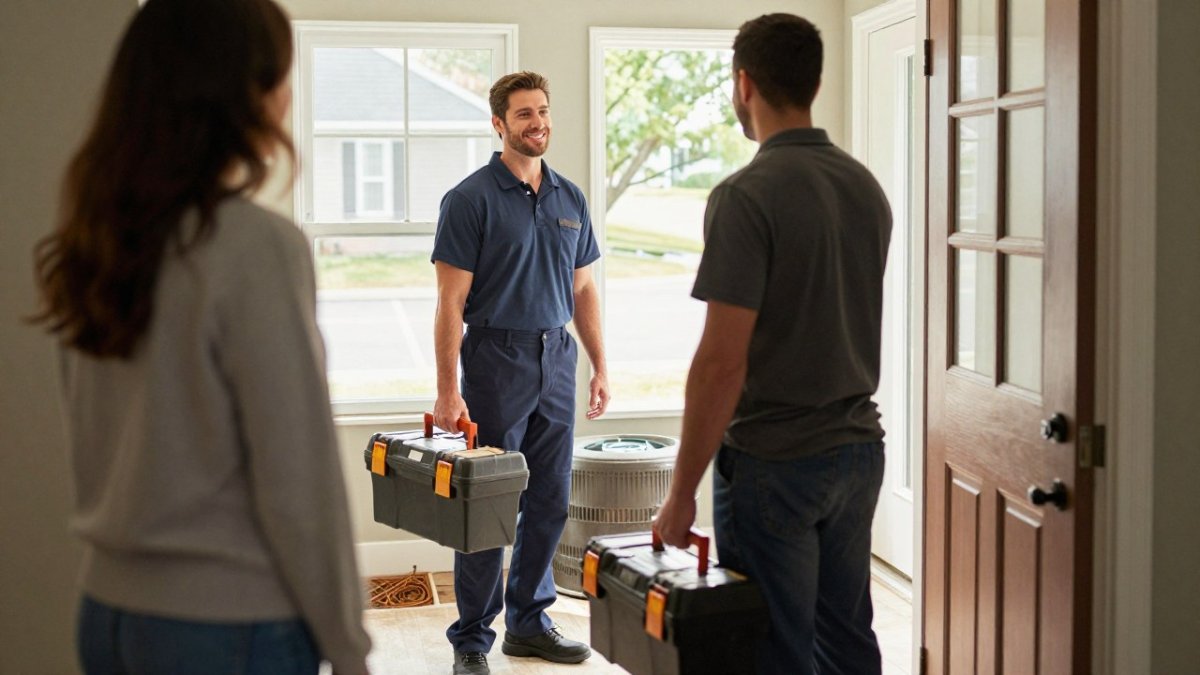
The technician will then walk to the furnace, often through the basement, utility closet or garage. Most technicians will ask you to point out the thermostat and any recent changes, such as a power outage or new filter.
What to Do Before a Furnace Technician Arrives
Preparation makes a furnace repair visit faster and cheaper. A few minutes of setup can save time once the technician is on site.
- Clear a path to the furnace, including any stored boxes or cleaning supplies.
- Write down the symptoms, when they started and what you tried.
- Check the air filter and note how dirty it looks.
- Make sure the thermostat is set to heat and the system is switched on.
- Have your system's model and age handy if you know them.
Watch out: Do not try to open or repair gas components yourself while waiting. If you smell gas, leave the home and call your gas utility from a safe location.
The Inspection: Visual Checks, Safety Tests and Diagnostics
A furnace repair visit usually follows a predictable inspection order, and knowing that order helps you follow along and ask better questions. A typical furnace repair visit often works from the outside of the unit inward, with findings confirmed by instruments before any repair is recommended.
1. The exterior and installation area. A technician may look at how the furnace sits, whether it is level and accessible, and whether anything stored nearby blocks airflow or creates a fire risk.
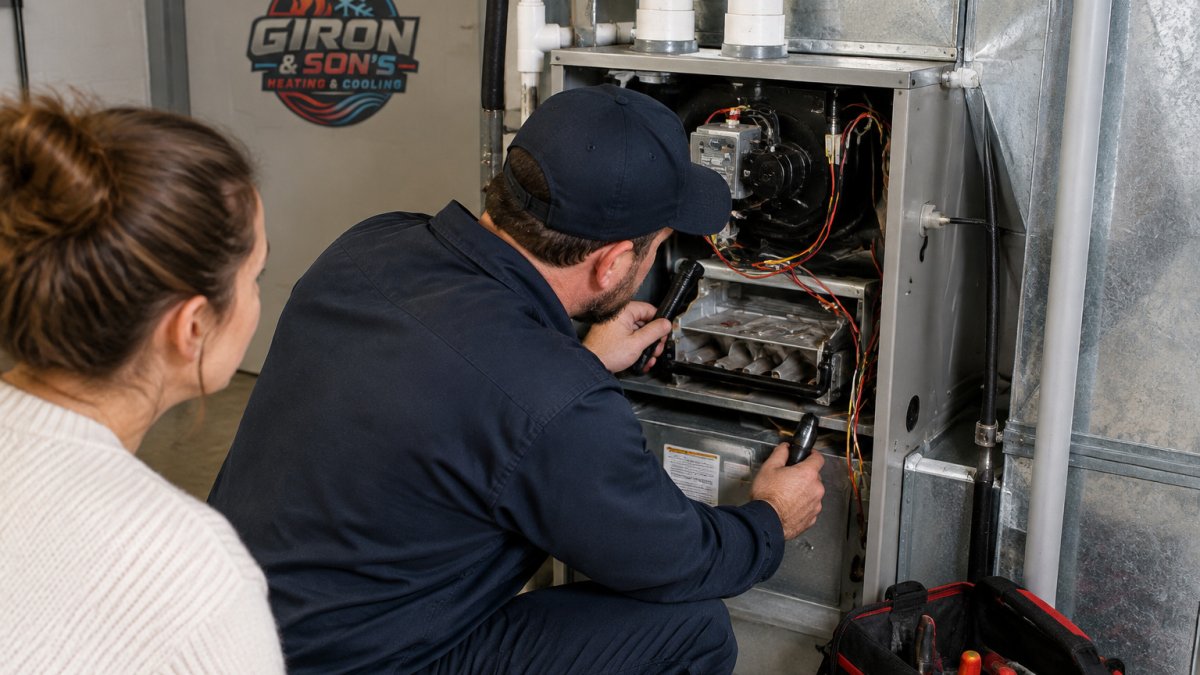
2. The cabinet and visible components. With the access panel off, the technician inspects the burners, heat exchanger, blower, wiring, and circuit board for rust, cracks, scorch marks, loose connections, or debris.
3. The filter and airflow path. The technician checks the air filter, the return duct connection, and the blower wheel. A clogged filter or a dirty blower wheel restricts airflow, which can cause the furnace to overheat and shut off on a high-limit switch.
4. Electrical and control checks. Using a multimeter, the technician measures voltage at the board, tests the thermostat's call for heat, and checks the safety switches, including the flame sensor and limit switch.
**5.
6. Combustion and carbon monoxide testing. Combustion analyzers are commonly used to measure carbon monoxide in the flue gas and confirm that a furnace is burning cleanly and venting properly.
7. Temperature rise and airflow measurement. Temperature rise can be measured by comparing return air and supply air temperatures and checking the result against the manufacturer's rating plate.
Watch out: Do not run the furnace after a technician has flagged a cracked heat exchanger, a failed draft test, or elevated carbon monoxide readings. Those findings mean combustion gases may be entering the home, and the unit should stay off until the repair is complete.
By the end of the inspection, the technician should be able to tell you which component failed, why it failed, and whether the repair is a simple part swap or a larger job.
A typical furnace repair visit follows a predictable inspection order, from the outside of the unit inward.
| Step | What the technician checks | Why it matters |
|---|---|---|
| 1. Exterior and installation area | Placement, venting and flue | Spotting blockages or exhaust spilling back into the home |
| 2. Cabinet and components | Burners, heat exchanger, blower, wiring | Finding rust, cracks, scorch marks or loose connections |
| 3. Filter and airflow path | Air filter, return duct, blower wheel | Clogs can cause overheating and high-limit shutoffs |
| 4. Electrical and control checks | Voltage, thermostat call, safety switches | Flame sensors coated with carbon can shut the furnace down |
| 5. Startup and ignition sequence | Full call for heat, watched in real time | Reveals faults faster than any single meter reading |
| 6. Combustion and CO testing | Flue gas, room CO, draft pressure | Elevated CO or failed draft means the furnace should not run |
| 7. Temperature rise and airflow | Return vs. supply air temperature | Rise that is too high or too low points to airflow or gas problems |
Diagnostic Fees, Estimates and Approval Before Work Begins
Ask about the diagnostic fee before the technician starts work. Our breakdown of typical diagnostic pricing and what it includes helps you know what to expect. Pricing depends on the complexity of the visit and other factors, so contact Giron & Son's Heating & Cooling or check our website for current pricing. A reputable technician should explain the fee and what it covers.
Once the cause is found, the technician should give you a written or verbal estimate covering labor and parts. Pricing depends on the part, the model and the availability of replacements. Contact Giron & Son's Heating & Cooling or check our website for a quote. Never approve work you do not understand. Ask the technician to explain each line item and whether a cheaper repair option exists.
Approval should happen before any repair starts. You have the right to say no, ask for time to think, or get a second opinion.
How Long Does Furnace Repair Take, and What If a Part Must Be Ordered
Most furnace repair visits fall into one of three timelines, and knowing which one you are in helps you plan your day and your budget.
Same-visit repairs (roughly one to two hours on site). Common failures, a dirty flame sensor, a failed igniter, a bad thermostat, a clogged filter, or a tripped limit switch, are usually diagnosed and fixed in a single visit. Many of these parts are commonly carried on service trucks, so a repair can sometimes happen right after diagnosis and approval.
Longer same-day repairs (roughly two to four hours). Replacing a blower motor, a draft inducer motor, a circuit board, or a gas valve takes more time because the technician has to remove and reinstall components, verify the new part, and retest the full sequence. If the part is on the truck, the visit can still finish the same day.
Follow-up visits (days to weeks). When the needed part is not on the truck, a heat exchanger for a specific model, a proprietary control board, or a motor that has to be ordered, the technician will schedule a return visit once the part arrives.
What to do while you wait for a part. Follow the technician's guidance on whether the furnace can run safely.
What happens at the follow-up visit. The technician installs the ordered part, repeats the startup and safety checks, and confirms temperature rise and carbon monoxide readings are back in range. Ask for the same retest documentation you would expect on the first visit, and confirm whether the part carries its own manufacturer warranty separate from the labor warranty.
How to evaluate the completed repair. Before the technician leaves, ask them to run the furnace through a full heating cycle while you watch. Confirm that the burner lights promptly, the blower comes on, warm air reaches the registers, and the thermostat responds when you raise the set point.
Watch out: Do not sign off on a repair you have not seen tested. If the furnace short-cycles or blows cold air again within a day or two of the visit, call the company back before the labor warranty window closes.
Questions to Ask an HVAC Technician During the Visit
Asking good questions helps you understand the repair and avoid surprises. Consider asking:
- What exactly is causing the problem?
- Is this repair urgent, or can it wait?
- What are my options, including the cheapest reliable fix?
- Which parts will be replaced, and are they new or refurbished?
- How long will the repair take, and will a follow-up visit be needed?
- What warranty covers the parts and labor?
- What maintenance can prevent this from happening again?
Furnace Repair vs. Replacement: Deciding What Comes Next
Many homeowners wonder whether to repair an old furnace or replace it. A repair often makes sense when the unit is relatively young, the problem is isolated and the parts are easy to find. Replacement may be the better choice when repairs are frequent, costly or the furnace is near the end of its expected life.
A good technician should lay out both options and explain the trade-offs honestly. Repair is usually the first step when the system is still sound. Ask the technician for a clear recommendation and the reasoning behind it.
Booking Your Furnace Repair Visit With Giron & Son's
If your furnace is not heating the way it should, the next step is to schedule a visit. You can review our book a furnace repair visit options and check HVAC repair and service in Columbia, IL to see the full range of residential services we offer. Homeowners facing urgent problems can also review our emergency furnace repair information to plan for fast help.
Giron & Son's Heating & Cooling is a veteran-owned business that focuses on clear communication, solid diagnostics and practical solutions. Schedule your visit online today.
Frequently Asked Questions
What happens during a furnace repair visit?
A furnace repair visit usually starts with a conversation about the symptoms you noticed, such as a furnace that won't ignite, short-cycles, or blows cool air. The technician then inspects the unit visually, checks the ignition sequence, measures airflow and temperature rise, and runs safety tests, including carbon monoxide checks. Once the cause is identified, the technician explains the problem and gives you a repair estimate before doing any work. You approve the repair, the technician completes it, and then retests the system to confirm it runs safely and efficiently.
How long does a furnace repair appointment usually take?
Many furnace repair visits take roughly one to two hours when the technician has the parts on the truck and the problem is straightforward, such as a faulty igniter or a clogged filter. Diagnosis can take longer when the cause is intermittent. If a part must be special-ordered, the technician may need a follow-up visit, which can add days. Ask the technician to estimate the timeline before work begins so you can plan around your schedule.
Will a furnace technician diagnose the problem before making repairs?
Yes. A reputable technician should identify the cause before recommending or performing any repair. Diagnosis includes inspecting components such as the igniter, flame sensor, blower motor and heat exchanger, and testing how the system performs. Ask about any diagnostic fee and whether it applies toward the repair if you proceed. You should receive a clear explanation and an estimate before approving work.
What questions should I ask a furnace repair technician?
Useful questions include: What is causing the problem? Is the repair a safety concern? What are the parts and labor costs, and is there a diagnostic fee? Is the repair warranted, and for how long? Will a follow-up visit be needed? Is the furnace repairable, or would replacement make more sense based on its age and condition? Getting clear answers before approving work helps you avoid surprises and make an informed decision.
