Quick Summary
Common hvac repair myths include the beliefs that closing vents saves energy, that bigger systems always perform better, and that AC blowing warm always means major failure. Many of these ideas cause airflow problems, wear, or unnecessary repair costs, so checking the basics first helps homeowners avoid expensive mistakes.
- Closing supply vents raises duct pressure and can leak air, so it often wastes energy.
- An oversized unit can short cycle, cool without removing humidity, and wear components faster.
- Check your air filter monthly in heavy seasons and replace it if light cannot pass through.
- Lowering the thermostat far below your target does not cool your home any faster.
- Refrigerant, gas, electrical, and sealed-component repairs should be handled by a licensed technician.
Table of Contents
- Why HVAC Myths Lead Homeowners to Costly Mistakes
- Myth 1: Closing Vents in Unused Rooms Saves Energy
- Myth 2: A Larger HVAC System Is Always Better
- Myth 3: A Dirty Air Filter Symptoms Are Always Obvious
- Myth 4: Turning the Thermostat Way Down Cools Your Home Faster
- Myth 5: An AC Blowing Warm Air Always Means a Major Failure
- When to Call an HVAC Technician Instead of Troubleshooting Yourself
- Booking Your Next HVAC Diagnostic Visit With Giron & Son's
- Frequently Asked Questions
Why HVAC Myths Lead Homeowners to Costly Mistakes
Last Updated: November 1, 2026
A small, reasonable-sounding idea can get repeated until it becomes a habit, and the habit quietly costs money. A closed vent here, a thermostat turned to the lowest setting there, a filter left in past its useful life. Most of these ideas sound logical, which is exactly why they stick around.
The result is often a system that works harder than it should. Airflow drops, runtime climbs, and parts wear out earlier. A homeowner who was trying to save energy ends up paying more for repairs. Common HVAC repair myths debunked is a useful place to start, because many of the fixes people try on their own do not address the real cause.
Below, we walk through seven widely repeated claims. For each one, we explain what the idea gets right, where it breaks down, and what to do instead. Some of these myths are harmless. Others can shorten the life of an expensive system.
Myth 1: Closing Vents in Unused Rooms Saves Energy
It seems obvious. Heat or cool a room you don't use, and you save money. Learn how closed vents affect airflow, static pressure, and HVAC performance on whether closing vents actually saves money. In practice, closing supply vents often does the opposite.
Your system is designed around a specific airflow. When you close vents, pressure builds inside the ductwork and the blower has to push against it. Air can leak out through gaps in the ducts instead of reaching the rooms you use. The system runs longer and still struggles to hold a steady temperature.
A better approach is to adjust dampers only where your installer has designed them to work, and to keep most vents open. If a room is consistently too hot or cold, the fix is usually airflow balancing or duct sealing, not closing the vent.
Myth 2: A Larger HVAC System Is Always Better
Bigger sounds safer. A larger unit should cool faster and never run out of capacity, right? An oversized system brings its own problems.
A unit with too much capacity cools the air quickly and shuts off before it has removed much humidity. The home feels clammy even at a low temperature. Short cycling also puts extra wear on the compressor and other components, and it makes the temperature swing more than it should.
System size should match the home's heat load, which depends on insulation, windows, ductwork, and layout (HVAC Proper Sizing of HVAC Systems). Sizing is a calculation, not a guess. If a contractor recommends a unit much larger than your current one without a load calculation, ask for the numbers before you agree.
Myth 3: A Dirty Air Filter Symptoms Are Always Obvious
Many homeowners assume a clogged filter will announce itself with a loud noise or a visible film of dust. Often it does not. The changes are gradual, and they are easy to mistake for normal wear.
Here is what is actually happening inside the system. A loaded filter raises static pressure in the return duct. The blower motor has to work harder to move the same volume of air, and the evaporator coil receives less airflow. Reduced airflow across the coil lowers its temperature, which can cause condensation to freeze on the coil instead of draining away. Once ice forms, airflow drops further, and the system may run continuously without reaching the set temperature.
Watch for these signs:
- Airflow from the vents feels weaker than before
- Some rooms heat or cool more slowly than others
- The system runs longer cycles to hold the set temperature
- Dust builds up faster on furniture and around vents
- Energy bills climb without an obvious reason
- Ice appears on the indoor coil or the larger refrigerant line
Filter type and thickness change the replacement interval. A basic 1-inch fiberglass filter mainly protects the equipment and may last one to three months. Pleated filters in the MERV 8 to MERV 11 range capture more particles but load faster, especially in homes with pets, carpet, or open windows. High-MERV filters above MERV 13 can restrict airflow in ducts that were not designed for them, so a filter that is "better" on the label can be worse for the system if the blower and ductwork cannot handle the pressure drop.
That is why the filter myth has a kernel of truth: some clogged filters do announce themselves, but the ones that cause the most expensive damage are the ones nobody noticed.
Filter symptoms are often subtle, and replacement intervals depend on the filter type you choose. See a practical guide to how often to change your HVAC filter for homeowners.
| Filter type | Replacement interval | Key note |
|---|---|---|
| Basic 1-inch fiberglass | One to three months | Mainly protects the equipment |
| Pleated MERV 8 to MERV 11 | Loads faster with pets or carpet | Captures more particles |
| Above MERV 13 | Check ductwork first | Can restrict airflow in ducts |
| Any filter | Check monthly in heavy seasons | Replace if light cannot pass through |
Myth 4: Turning the Thermostat Way Down Cools Your Home Faster
When you come home on a hot afternoon, it is tempting to set the thermostat to 60 degrees and hope for quicker results. The system does not cool any faster at a lower setting. It runs at the same capacity until it reaches the target, then it keeps running longer than necessary.
The result is a bigger energy bill and a higher chance of overshooting into an uncomfortably cold house. Setting the thermostat to a comfortable temperature and adjusting it gradually works better. A programmable or smart thermostat can raise the setting while you are away and lower it before you return.
Thermostat settings matter for efficiency, but extreme settings rarely deliver what people expect. Pick a comfortable temperature and let the system do its job.
Myth 5: An AC Blowing Warm Air Always Means a Major Failure
Warm air from the vents feels like a disaster, and sometimes it is. But many causes are simple and inexpensive to fix. Before assuming the compressor has died, check the basics. Follow a step-by-step guide to troubleshooting an AC blowing warm to see what you can check yourself.
Start with the thermostat. Confirm it is set to cool, the fan setting is correct, and the batteries are not dead. Next, check the air filter, because a clogged one can cause the coil to freeze and blow warm air. Look at the outdoor condenser to make sure the fan is spinning and nothing is blocking airflow around the unit. Check the circuit breaker and any disconnect switch near the outdoor unit.
Those checks are safe for most homeowners. The line between safe troubleshooting and work that requires a licensed technician is clearer than many people realize:
- Safe to check yourself: thermostat settings and batteries, filter condition and size, breaker and disconnect switch positions, visible debris around the outdoor unit, and whether the outdoor fan is spinning.
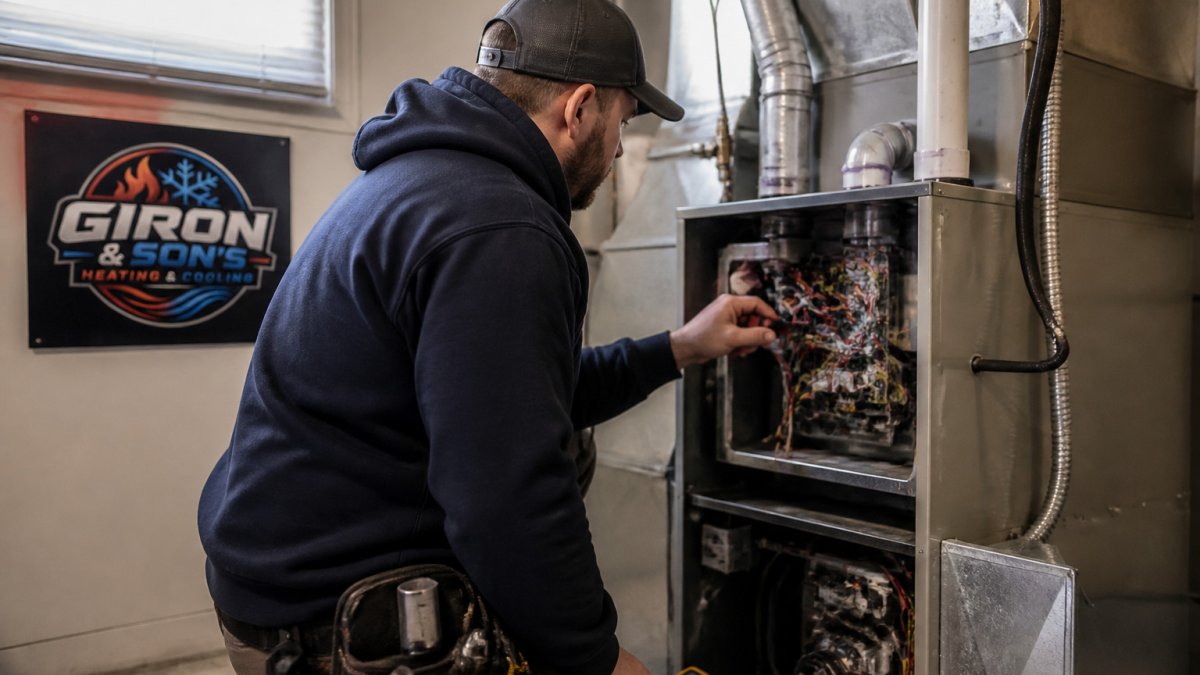
- Stop and call a technician: anything involving refrigerant lines, the compressor, capacitors, contactors, gas piping, electrical panels, or sealed components. Refrigerant handling is regulated, and a licensed technician should perform it (the EPA).
If the simple checks do not solve the problem, the cause could involve refrigerant charge, a failed capacitor, a stuck contactor, or the compressor.
Repair-versus-replace is a decision worth discussing with a technician. Ask for the age of the equipment, the expected remaining life, and the cost of the repair versus replacement before you decide.
If those checks do not solve the problem, the cause could involve refrigerant, electrical components, or the compressor. Those repairs need a licensed technician. Troubleshooting AC unit blowing warm is a useful first step, but it is not a substitute for a diagnostic visit when the simple fixes fail.
When to Call an HVAC Technician Instead of Troubleshooting Yourself
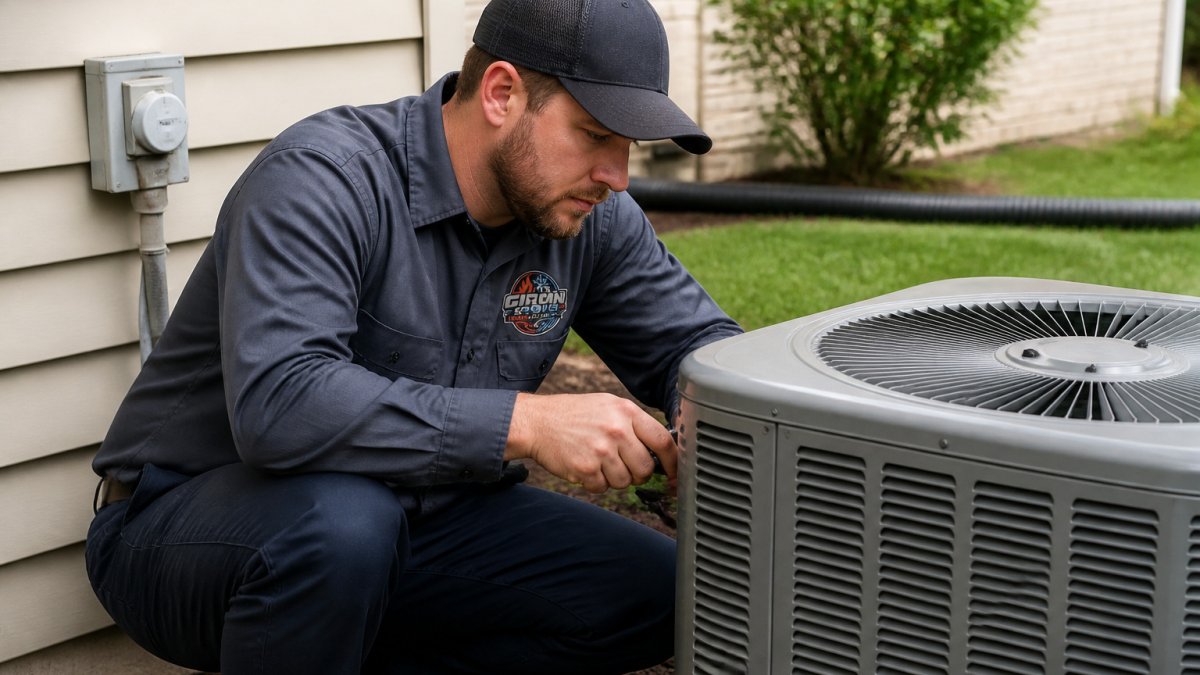
Basic checks are safe for most homeowners. Filter changes, thermostat settings, and clearing debris from around the outdoor unit are reasonable tasks. Anything involving refrigerant, gas lines, electrical panels, or sealed components should be left to a licensed professional.
Call a technician when:
- The system does not start after you have checked the breaker and thermostat
- You smell gas, burning, or a sharp chemical odor
- Ice forms on the refrigerant lines or indoor coil
- The system short cycles or runs constantly without reaching the set temperature
- Strange noises, such as grinding or banging, come from the equipment
- Repairs keep recurring, which may signal a larger problem
A proper diagnosis looks for the actual cause before parts are replaced.
Booking Your Next HVAC Diagnostic Visit With Giron & Son's
If your system is blowing warm air, running constantly, or showing any of the warning signs above, a professional diagnosis is the fastest way to get answers. Giron & Son's Heating & Cooling is a veteran-owned business serving Monroe County and surrounding Illinois communities. We aim to communicate clearly about what we find and what your options are.
You can book a diagnostic visit online or review our residential HVAC repair and service options to see how we handle maintenance, repairs, and replacements for local homes. Scheduling online is a convenient way to get on the calendar.
Frequently Asked Questions
What are the most common HVAC repair myths?
The most common HVAC repair myths include the belief that closing vents saves energy, that a bigger system always performs better, that a dirty filter always shows obvious signs, that turning the thermostat lower cools a home faster, and that warm air from an AC always means a major failure. Each of these claims has exceptions and misunderstandings that can lead to higher utility bills, unnecessary repairs or lost comfort. Checking the actual cause before acting is the safest approach, and a technician can confirm what is really happening in your system.
Can a dirty air filter cause an AC to blow warm air?
A severely clogged air filter can restrict airflow across the evaporator coil, which can reduce cooling and in some cases cause the coil to freeze. Restricted airflow may make the air coming from vents feel less cool, especially during peak heat. However, warm air can also come from a refrigerant problem, a failed capacitor or a compressor issue, so a dirty filter is only one possible cause. Replacing the filter is an inexpensive first check, and if the air stays warm afterward, a technician should inspect the system.
Should you keep running an air conditioner that is not cooling?
No. If your air conditioner is running but not cooling, continuing to operate it can put added strain on the compressor and other components, which can turn a manageable repair into a more expensive one. Check that the thermostat is set to cool, confirm the air filter is clean and make sure the outdoor unit is not blocked by debris. If those checks do not resolve the problem, turn the system off and contact a licensed HVAC technician for a diagnostic visit.
When should you call a professional for HVAC repair?
Call a licensed technician when the system is not cooling or heating properly after basic checks, when you notice unusual noises, burning smells, water leaks, frequent cycling or a sudden rise in energy bills. Work involving refrigerant, electrical components, gas lines or the internal parts of the unit should always be handled by a professional. Homeowners can safely replace filters, clear debris from around the outdoor unit and confirm thermostat settings, but anything beyond those steps is best left to a qualified technician.
