Last Updated: November 21, 2026
Quick Summary
To schedule HVAC repair, first sort the problem into emergency, urgent, or routine, then gather the model number, symptoms, and thermostat settings before you call. Book immediately for a heat or cooling failure, and within the week for minor issues.
- Call right away if the heat stops in winter or you smell gas or burning.
- Book within a day or two if the system runs but does not cool or heat evenly.
- Find the brand and model number on the outdoor unit or furnace cabinet before calling.
- Ask for the diagnostic fee and whether it is credited toward the repair.
- Insist on a written estimate before approving any work.
Table of Contents
- Start With Repair Triage: Is This an Emergency?
- HVAC Repair Scheduling Checklist: What to Have Ready Before You Call
- How to Choose an HVAC Contractor Worth Calling
- Questions to Ask an HVAC Technician Before Booking
- Step-by-Step: How to Book the Repair Visit
- HVAC Diagnostic Fee, Estimates, and Approving Repairs
- Booking Your Repair Visit With Giron & Son's Heating & Cooling
- Frequently Asked Questions
Start With Repair Triage: Is This an Emergency?
Not every HVAC problem needs a same-day call, and knowing the difference before you schedule HVAC repair saves money and stress. At Giron & Son's Heating & Cooling, we help homeowners sort problems into three groups: emergency, urgent, and routine. Sorting the problem first tells you how fast to book and what to tell the scheduler.
Call right away if:
- The heat stops in winter and the home drops toward freezing
- The air conditioner stops during a heat wave, especially with children, older adults, or pets at home
- You smell gas, burning, or hear a loud bang from the unit
- Water is leaking into the home or pooling around the furnace
Book within a day or two if:
- The system runs but does not cool or heat evenly
- The unit short-cycles, turning on and off every few minutes
- Airflow feels weak from one or more vents
Routine, schedule within the week if:
- The system makes a new noise but still works
- The thermostat reads wrong or the schedule settings do not hold
- Maintenance is overdue
Be honest with yourself about the category. Choosing the wrong group leads to either a long wait during a real emergency or an expensive rush for a problem that could wait.
HVAC Repair Scheduling Checklist: What to Have Ready Before You Call
A prepared caller gets a faster, more accurate appointment. Before you dial, gather these details:
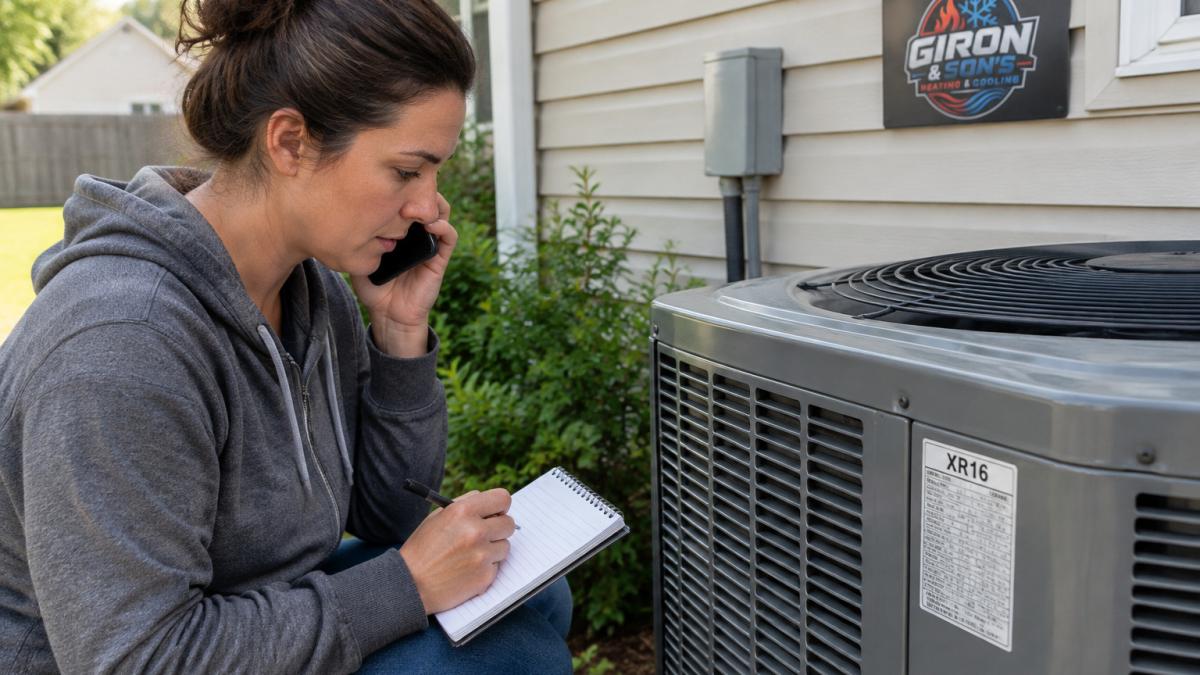
- Brand and model number: Find the label on the outdoor unit or the furnace cabinet.
- Approximate age: Check the install date on the label or your home purchase records.
- Symptoms: Write down what you see, hear, or smell, and when it started.
- Thermostat settings: Note the mode, the set temperature, and the room temperature.
- Recent work: Record any past repairs, filter changes, or maintenance visits.
- Access details: Confirm where the equipment sits and whether pets or gates need attention.
- Your availability: Pick two or three windows that work for you.
Having these ready keeps the call short, and when you schedule HVAC repair with these details in hand, the technician is more likely to bring the right parts on the first visit. For a deeper look at what to gather, see our HVAC Diagnostics & Troubleshooting in Monroe County, IL page.
How to Choose an HVAC Contractor Worth Calling
Picking a contractor matters as much as picking a time. Here is how to vet a company in a way that holds up if something goes wrong.
Verify the license and insurance before you book. HVAC contractors are generally required to hold a license issued by the state or local licensing authority, and the licensing board's website is the place to check it. Ask for the license number and confirm it is active and in the company's legal name, not just a technician's name. Then ask for a certificate of insurance showing both general liability and workers' compensation coverage. If a company cannot produce both, walk away, an uninsured technician injured in your home or a botched install that damages your property can become your problem.
Confirm the company actually services your equipment. Ask whether the technicians are factory-authorized for your brand. Some manufacturers require authorized dealers for warranty repairs, and using an unauthorized company can void coverage on a system still under warranty. Check the warranty terms for your unit before you book anyone.
Read reviews for patterns, not stars. A single one-star review is noise; three reviews mentioning the same problem, no-shows, surprise charges, pressure to replace instead of repair, is a signal. Look at the most recent 90 days rather than the all-time average, since ownership and staffing change.
Ask what the diagnostic fee covers and whether it is credited. A common pattern is a flat diagnostic fee that is waived or applied to the repair if you approve the work. Get that in writing or confirmed by email before the visit so there is no dispute later.
Watch out: Be wary of any contractor who quotes a full system replacement before diagnosing the existing unit, or who pressures you to sign on the first visit. A fair company will explain the failed part, show it to you when possible, and give you time to decide.
If you are comparing firms, our guide to how to get quick HVAC repair quotes that are fair walks through what to request from each company.
Questions to Ask an HVAC Technician Before Booking
Before you book, ask a few direct questions:
- Do you charge a diagnostic fee, and does it apply to the repair?
- Will you give me a written estimate before starting work?
- Do you carry licensing and liability insurance?
- What is your arrival window, and what happens if you run late?
- Do you work on my brand and model of equipment?
- What warranty do you offer on parts and labor?
The answers tell you a lot. Vague responses to pricing or warranty questions are a warning sign. A good technician welcomes these questions.
Step-by-Step: How to Book the Repair Visit
Follow these steps to schedule the repair:
- Triage the problem. Decide whether it is an emergency, urgent, or routine issue.
- Gather your details. Use the checklist above.
- Call or book online. Describe the symptoms and share your model number.
- Confirm the appointment window. Ask for a text or call reminder.
- Clear the area. Remove boxes or items around the unit so the technician can work.
- Stay reachable. Keep your phone on and answer calls from the technician.
- Review the findings. Ask the technician to explain the problem before approving work.
Visits typically involve a diagnosis and a repair estimate before any work is approved. If you want to book now, you can schedule online through the Giron & Son's Heating & Cooling website.
The steps below summarise the booking process, with the time or frequency for each.
| Step | What to do | Time or frequency |
|---|---|---|
| Triage the problem | Decide if it is an emergency, urgent, or routine issue | Before calling |
| Gather your details | Use the scheduling checklist | Before calling |
| Call or book online | Describe symptoms and share your model number | At booking |
| Confirm the window | Ask for a text or call reminder | At booking |
| Clear the area | Remove boxes or items around the unit | Before arrival |
| Stay reachable | Keep your phone on for technician calls | During visit |
| Review the findings | Ask for the problem explained before approving work | At diagnosis |
HVAC Diagnostic Fee, Estimates, and Approving Repairs
Many companies charge a diagnostic fee to cover the technician's time to identify the problem, separate from the cost of the repair itself. Fee structures vary, so ask for the current rate when you book. Ask for the current rate when you book, and ask two follow-up questions: whether the fee is credited toward the repair if you approve the work, and whether it changes for after-hours or emergency calls.
What a written estimate should contain. Once the technician finds the cause, ask for a written estimate before any work begins. A complete estimate lists the failed part or parts, the labor to replace them, any diagnostic or trip charge, applicable tax, and the total. It should also state the warranty on parts and labor and an expected completion time. If the estimate is verbal only, ask for it by email or text, a legitimate company will provide it.
How approval works. Approving an estimate authorizes the listed work at the listed price. It does not obligate you to approve additional work the technician discovers mid-repair. If the scope changes, ask for a revised written estimate before the extra work starts. You can decline, ask for time to think it over, or get a second opinion, a fair company will allow all three.
Watch out: Verbal approvals are the most common source of surprise charges. If a technician says the price out loud and starts working, you have no record of what you agreed to. Insist on the written estimate first, every time.
When to get a second estimate. When a repair is costly or the recommendation is a full system replacement, a second estimate can be a reasonable step. Expect that a second diagnostic fee may apply. For more on what to watch for, read our guide to how to avoid hidden HVAC repair fees and our page on the average cost of a residential HVAC diagnostic.
Booking Your Repair Visit With Giron & Son's Heating & Cooling
Giron & Son's Heating & Cooling serves homeowners in Monroe County and nearby Illinois communities. As a veteran-owned business, we focus on clear communication and solid diagnostics. If you would rather prevent the next breakdown, our HVAC maintenance and tune-up services help keep your system running well through each season.
Ready to get your system checked? Schedule online or contact us today, and we will walk you through the next steps.
Frequently Asked Questions
How soon should I schedule an HVAC repair?
Schedule repairs as soon as you notice symptoms such as weak airflow, unusual noises, frequent cycling, or a system that won't turn on. Same-day or emergency service may be needed if there is no heat during freezing weather, no cooling for vulnerable household members, a burning smell, or visible smoke. For non-urgent problems, booking within a few days helps prevent a small fault from becoming a costly failure. Describe the symptoms clearly when you call so the scheduler can prioritize your visit appropriately.
What is an HVAC diagnostic fee and is it worth paying?
An HVAC diagnostic fee is the charge for a technician to inspect the system, identify the cause of the problem, and explain the repair options. Fees vary by company and region, so ask about the charge when you book and whether it is credited toward the repair if you approve the work. Request a written estimate before any work begins.
What information should I have ready when scheduling HVAC repair?
Have the system type, brand, and model number from the unit's data plate, the approximate age of the system, and a list of symptoms with when they started. Note recent maintenance, any previous repairs, your thermostat settings, and whether the system is gas, electric, or a heat pump. Know your address, access details, and a time window when someone can be present. Having these details ready shortens the call and helps the technician arrive with the right parts and tools.
How do I know whether I need HVAC repair or routine maintenance?
Routine maintenance is preventive work, such as filter changes, cleaning, and inspections, usually performed in the spring and fall. A repair is needed when something is failing or has stopped working, such as weak cooling, strange noises, short cycling, or water leaks. If the problem is new or getting worse, schedule a repair visit rather than waiting for the next maintenance appointment. A good technician will explain which category the work falls into and why.
