
Last Updated: November 2, 2026
Quick Summary
Water inside usually means the ac leaking water problem is a drainage issue, most often a clogged condensate drain line. Other common causes are a dirty air filter or a frozen evaporator coil, which melts and overflows the drain pan.
- Check the PVC condensate drain line first, since clogs cause most indoor leaks.
- Replace a gray, clogged air filter, since restricted airflow can freeze the coil.
- Shut the system off at the thermostat before dealing with a frozen coil.
- Do not chip ice off the coil; the tubing is thin and easy to puncture.
- Call a licensed technician for refrigerant issues or if the coil freezes again.
Table of Contents
- Why Your AC Is Leaking Water Inside: The Main Suspects
- AC Drain Line Clogged: The Most Common Culprit
- Dirty Air Filter Causing AC Leak: How Restricted Airflow Creates Water
- Frozen Evaporator Coil Leaking Water: When Ice Melts Indoors
- Condensation or a Real Leak? How to Tell the Difference
- AC Leaking Water Repair Cost: DIY Fixes Versus a Technician
- Booking Your Diagnostic With Giron & Son's Heating & Cooling
- Frequently Asked Questions
At Giron & Son's Heating & Cooling, we see the same question every week: why is my AC leaking water inside?
Air conditioners pull moisture out of your home's air as they cool it. That moisture is supposed to flow out through a condensate drain line.
Below, we walk through the main suspects, how to tell them apart, what you can safely check, and when the repair is better left to a professional.
Why Your AC Is Leaking Water Inside: The Main Suspects
Most indoor AC water leaks trace back to one of four problems: a clogged drain line, a disconnected or cracked drain line or pan, a dirty air filter, or a frozen evaporator coil. Low refrigerant can also contribute to coil icing, which leads to melting water later.
A clogged condensate drain line is one of the most common causes of indoor leaks, and it is often the easiest to inspect and fix. Start there.
AC Drain Line Clogged: The Most Common Culprit
A clogged condensate drain line is the leading cause of indoor AC leaks. Algae, dust, and debris build up inside the PVC pipe over time.
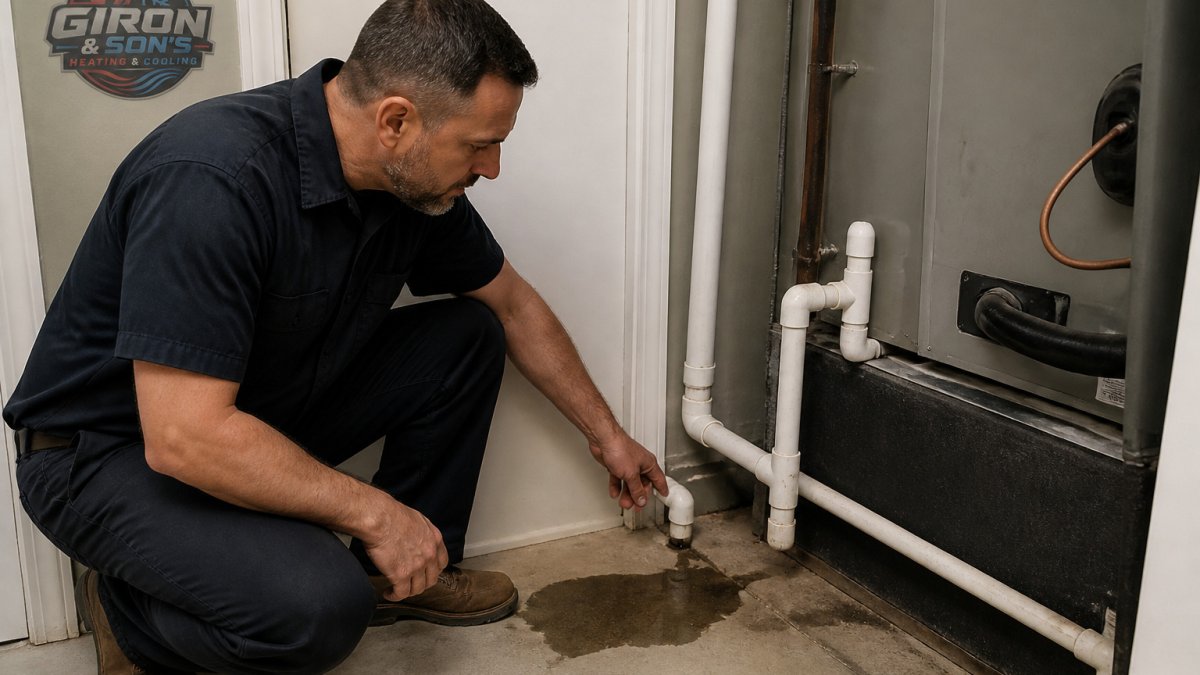
Look for a PVC pipe, usually white, near the indoor air handler. Water dripping from the pipe's exit point or a puddle beneath the unit points to a blockage.
Watch out: never use a sharp tool or excessive force on the pipe, since it can crack and make the leak worse.
Disconnected or Cracked Drain Lines and Pans
Sometimes the line is clear but not attached correctly. A joint can come loose, a fitting can crack, or the drain pan can rust through. Check that the drain line connects firmly at every joint and that the pan sits level under the air handler. A cracked or rusted pan usually needs replacement rather than patching.
Here is how the main leak causes compare, so you can check the likeliest ones first.
| Problem | Cause | Fix |
|---|---|---|
| Water at drain pipe exit | Algae, dust, debris clog the PVC line | Clear the line; avoid sharp tools |
| Loose or cracked joint | Fitting came loose or cracked | Reconnect firmly at every joint |
| Rusted or cracked pan | Pan has worn through | Replace the pan |
| Gray, clogged filter | Restricted airflow freezes the coil | Replace the filter; recheck monthly |
| Ice on refrigerant lines | Frozen evaporator coil | Thaw; find airflow or refrigerant cause |
Dirty Air Filter Causing AC Leak: How Restricted Airflow Creates Water
A dirty filter restricts airflow across the evaporator coil. With less warm air passing over it, the coil gets colder than it should and can start to ice.
Check your filter monthly during heavy use. If it looks gray and clogged, replace it. A filter that is not restricting airflow will not cause this problem, so the filter check is quick to rule out.
Frozen Evaporator Coil Leaking Water: When Ice Melts Indoors
A frozen evaporator coil is a two-stage problem: the ice itself, and whatever caused it. The water you see inside is usually meltwater from the ice thawing, which can overwhelm the drain pan and spill onto the floor or ceiling. Treat the ice first, then find the cause, or the leak will return.
How to confirm the coil is frozen
Look for these signs at the indoor air handler:
- White frost or a solid ice sheet on the copper refrigerant lines entering the cabinet.
- Ice visible on the coil behind the access panel (if your unit has a sight glass or removable panel).
- The system runs but delivers little cooling, and airflow from the vents feels weak.
- Water appears only after the system has run a while and then shuts off, which is the melt cycle.
Safety triage: what to do first
- Turn the system off at the thermostat. Running a frozen coil can slug liquid refrigerant back to the compressor and cause expensive damage.
- Leave the fan on if your thermostat allows it. Fan-only mode moves air across the coil and speeds thawing without running the compressor.
- Do not chip or pry at the ice. The coil tubing is thin and easy to puncture; a punctured coil turns a thaw job into a refrigerant repair.
- Catch the meltwater. Place towels or a shallow pan under the unit and check the drain pan. If water is near wiring or the circuit board, shut off the breaker as well.
- Allow 1-3 hours to thaw depending on ice thickness. Do not restart cooling until the ice is gone.
Diagnose the cause: airflow versus refrigerant
Once the coil is thawed, the cause usually falls into one of two categories. This distinction matters because one is a DIY fix and the other is not.
Airflow restriction (homeowner-fixable):
- Dirty air filter, replace it and recheck.
- Blocked return vent, make sure furniture, rugs, or boxes are not covering return grilles.
- Closed or blocked supply registers, open them and confirm airflow at each vent.
- Dirty blower wheel, visible dust buildup on the blower is a technician cleaning job but is still an airflow cause.
Refrigerant or mechanical fault (technician-only):
- Low refrigerant charge from a leak, the coil gets colder than designed and freezes even with clean airflow.
- Failing blower motor, weak airflow with a clean filter points here.
- Restricted metering device or a kinked line, less common but requires gauges to diagnose.
A practical test: replace the filter, open all registers, thaw the coil fully, and run the system for a day. Refrigerant handling is regulated at the federal level, so a recharge should be left to a licensed technician (the EPA).
Why this leak recurs
A thawed coil that is not root-caused will freeze again on the next long cooling cycle, and the meltwater will find the same path out of the pan. If you have thawed the same coil twice in one season, stop repeating the thaw and book a diagnostic that checks charge, airflow, and blower performance together.
Condensation or a Real Leak? How to Tell the Difference
Some moisture on the outside of the indoor unit or on the ductwork is normal condensation, especially on humid days. A real leak produces steady dripping, pooling water, or stains that keep returning.
Ask yourself three questions. Is the water coming from the drain line, the drain pan, or the unit itself? Does it happen only when the system runs? Does it get worse over a day or two?
AC Leaking Water Repair Cost: DIY Fixes Versus a Technician
Most indoor AC leaks fall into one of two buckets: a low-risk drainage or airflow fix you can handle yourself, or a repair that involves refrigerant, electrical components, or equipment replacement and should go to a licensed technician. Knowing which bucket you are in tells you whether to grab a shop vac or pick up the phone.
What homeowners can safely fix
These tasks are low-risk and inexpensive.
- Clear a clogged condensate drain line. A drain brush or drain-cleaning attachment runs about $10-$25, and distilled white vinegar is a few dollars. Flushing the line takes 15-30 minutes.
- Replace the air filter. A standard 1-inch pleated filter runs about $8-$25 depending on size and MERV rating. This is a 5-minute job.
- Straighten a kinked or re-seated drain line. If a flexible drain hose slipped off a fitting, re-clamping it is a no-cost check.
- Vacuum standing water from the drain pan. A wet/dry shop vac handles this safely once the system is off at the thermostat.
If the leak stops after one of these fixes and stays dry for a few days of running, you have likely solved it.
What requires a technician
Do not attempt these yourself. They involve refrigerant handling (regulated under Section 608 of the Clean Air Act), line-voltage electrical work, or equipment replacement.
- Refrigerant leak or low charge. Diagnosis and recharge require licensed equipment and certification. The cost of a refrigerant leak repair depends on the leak location and how much refrigerant the system holds, so it is best quoted after diagnosis.
- Frozen coil that returns after thawing. If the coil ices again after you replace the filter and let it thaw, the cause is likely low refrigerant or a failing blower, both technician territory.
- Cracked, rusted, or overflowing drain pan. Pan replacement is a parts-and-labor job; on many units the pan sits beneath the coil and requires disassembly to access.
- Damaged or disconnected drain line inside the cabinet. If the break is behind panels or in a hard-to-reach chase, a technician should make the repair.
- Water reaching electrical components. Shut off the breaker and call a professional; this is a safety issue, not a DIY one.
Urgency tiers
- Same day (shut it off now): water dripping near electrical parts, water coming through a ceiling, or active ice on the coil with the system running.
- Within a few days: steady drip from the drain line that you cannot clear, or a pan that keeps overflowing after you vacuum it.
- Schedule routine service: occasional condensation on the cabinet exterior, or a leak that stopped after a filter change.
A common pattern is that a cleared drain line buys time but does not fix a recurring root cause. If you have cleared the same line twice in a season, ask the technician to check drain slope and install a float switch so the system shuts off before the pan overflows.
Booking Your Diagnostic With Giron & Son's Heating & Cooling
A leak can have one cause or several, and guessing wastes time and money. Our diagnostic looks at the drain line, pan, filter, coil, and refrigerant level to find where the water is coming from and what is causing it.
Schedule your appointment online or contact us to get your system checked. For a step-by-step guide to troubleshooting on your own first, read our article on troubleshooting an AC unit blowing warm.
Frequently Asked Questions
How much does it cost to fix an AC that is leaking water?
Repair costs depend on the cause, the equipment, and how much access the technician needs. Giron & Son's Heating & Cooling does not publish a flat rate for leak repairs, so pricing depends on the diagnosis. Contact the company or book online for a quote specific to your system.
Can a dirty air filter cause an AC to leak water?
Yes. A clogged filter restricts airflow across the evaporator coil, which can drop the coil temperature below freezing. Ice forms on the coil, and when it melts faster than the drain pan can handle, water overflows into the home. Replacing the filter on schedule is an easy first step.
Is it safe to run an air conditioner that is leaking water?
It is safer to shut the system off at the thermostat and at the indoor unit's power switch until the source is identified. Running a unit that is overflowing can damage flooring, drywall, and electrical components near the air handler. If the leak is from a frozen coil, let the ice melt fully before restarting, and do not run the system to speed up the thaw. If you are unsure, call a technician before turning it back on.
When should I call an HVAC technician for an indoor AC leak?
Call a technician if the leak returns after clearing the drain line, if you see ice on the coil or refrigerant lines, if water is coming from the air handler itself rather than the drain, or if the system is making unusual noises. Water near electrical components is another reason to shut down and call. A professional can identify the leak source by location and system type, which is often faster than trial and error.
