Last Updated: October 25, 2026
Quick Summary
A furnace pilot light keeps going out most often due to a faulty thermocouple, dirty pilot tube, drafts, or gas supply problems. The thermocouple senses the pilot flame and signals the gas valve to stay open; when it fails, the valve closes and shuts off gas to the pilot.
- A faulty thermocouple is the most common cause; the pilot lights but dies within seconds of releasing the control knob.
- Dirty or clogged pilot tubes block gas flow, causing the flame to appear smaller or flicker before dying out.
- Drafts from basement windows, doors, or air leaks can blow out the small pilot flame directly.
- If the pilot dies after you release the knob, hold the control for a full 60 seconds to let the thermocouple heat up fully.
- Call a professional if the pilot won't light at all, dies repeatedly, or if you smell gas near the furnace.
Table of Contents
- Why Your Furnace Pilot Light Keeps Going Out
- Thermocouple Problems: Recognizing Furnace Thermocouple Symptoms
- Dirty or Blocked Pilot Tube and Burner Assembly
- How to Relight a Furnace Pilot Light Safely
- Why Your Furnace Pilot Light Goes Out After Releasing the Knob
- Drafts and Airflow: How Wind Blows Out Your Pilot Flame
- Gas Supply and Gas Valve Issues
- When to Call a Professional and What to Document
- Frequently Asked Questions
Why Your Furnace Pilot Light Keeps Going Out
When your furnace pilot light keeps going out, it's frustrating: you relight it, and days or weeks later it's dark again. The cause is usually a faulty thermocouple, a dirty pilot tube, drafts, or gas supply problems.
Common reasons a furnace pilot light goes out
A dirty or clogged pilot tube blocks gas flow, starving the flame until it goes out.
Drafts and airflow from a basement window, door, or air leak near your furnace can blow out the pilot directly.
Finally, misaligned or bent components in the pilot assembly prevent proper ignition; vibration or corrosion shifts parts out of position over time.
The most common causes of a furnace pilot light going out fall into a few categories.
| Cause | What Happens | How to Identify |
|---|---|---|
| Faulty thermocouple | Gas valve closes, shutting off pilot gas | Pilot lights but dies within seconds of releasing knob |
| Dirty or clogged pilot tube | Gas flow blocked, flame starves and dies | Flame appears smaller than normal or flickers |
| Drafts and airflow | Wind or air movement blows out small flame | Pilot goes out after basement door or window opens |
| Gas supply or valve issues | Low pressure or valve failure prevents ignition | Weak or no flame; other gas appliances also weak |
| Misaligned or bent components | Improper ignition and flame contact | Vibration or corrosion shifts parts over time |
Thermocouple Problems: Recognizing Furnace Thermocouple Symptoms
Your thermocouple generates a small electrical signal when exposed to the pilot flame, and that signal keeps the gas valve open.
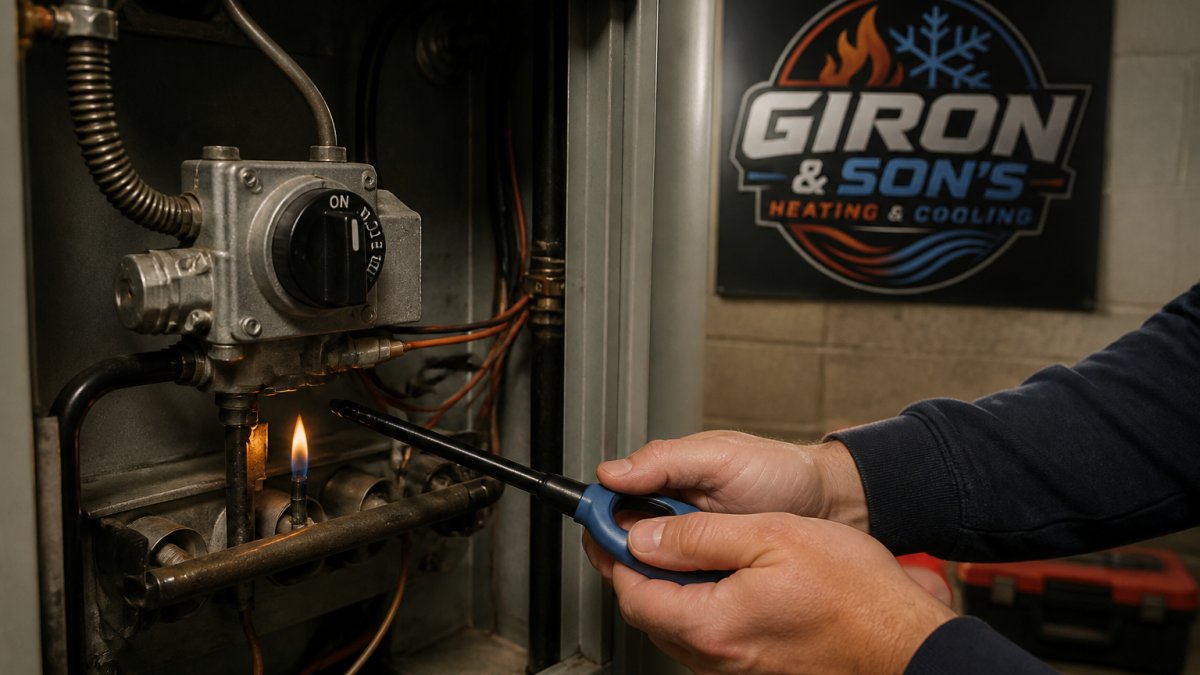
Testing a thermocouple requires special equipment and correct interpretation of the multimeter reading. A professional can verify whether a thermocouple produces adequate signal before recommending replacement.
Replacement is straightforward: the thermocouple unscrews from the gas valve and pilot assembly, costs little, and installs in minutes.
Dirty or Blocked Pilot Tube and Burner Assembly
Dust and debris accumulate inside your furnace over time.
When the pilot tube clogs, gas flow slows or stops: the flame may light briefly but can't sustain itself, appearing smaller than normal or flickering before dying out.
Cleaning the pilot tube requires careful disassembly. The tube connects to both the gas valve and the pilot assembly. You'll need to:
- Turn off gas to your furnace
- Locate the pilot tube connection points
- Gently disconnect the tube
Watch out: forcing a clogged pilot tube can damage the connection threads. If you encounter resistance, stop and contact a professional.
The burner assembly can also collect debris. Soot buildup on the burner ports reduces flame quality and stability. A gentle cleaning with a soft brush restores normal operation.
How to Relight a Furnace Pilot Light Safely
Before you touch anything, confirm you actually have a standing pilot. Many furnaces built in the last 20 to 30 years use electronic ignition (intermittent pilot, hot surface, or direct spark) and have no standing pilot flame to relight. A blinking LED control board, a hot surface igniter, or a draft inducer fan that runs before ignition all point to electronic ignition.
Step-by-step relighting for a standing pilot
Step 1: Set the control to Off and wait. Turn the gas control knob to "Off" and wait at least 5 minutes so residual gas in the combustion chamber dissipates. Do not skip the wait even if the pilot has been out for hours.
Step 3: Hold the control in the Pilot position. Press and hold the knob in the "Pilot" position.
Step 4: Light the pilot. Use a long-reach lighter or a match held with pliers, holding the flame at the pilot opening for 10 to 15 seconds.
Step 6: Release slowly and set to On. Release the knob.
Step 7: Call for heat and observe. Raise the thermostat setpoint; the main burner should ignite within a minute or two.
When not to relight
Do not attempt a relight if any of the following apply:
- You smell gas anywhere near the furnace or in the basement.
- The furnace has been flooded or shows water damage around the gas valve.
- The pilot assembly or thermocouple is visibly damaged, corroded through, or misaligned.
Standing pilot vs. electronic ignition: why the distinction matters
A standing-pilot furnace burns a small flame continuously, 24 hours a day, whether or not there is a call for heat.
With electronic ignition, the troubleshooting path differs: a blinking fault code, a cracked igniter, a dirty flame sensor, or a failed inducer pressure switch are likelier culprits than a thermocouple. Do not follow standing-pilot relighting steps on an electronic-ignition furnace; start with the owner's manual and the fault-code chart on the blower door.
Why Your Furnace Pilot Light Goes Out After Releasing the Knob
The thermocouple generates current when heated by the pilot flame, and that current holds open the main gas valve.
Several factors cause weak thermocouple output:
- Age and wear: Older thermocouples lose sensitivity
- Corrosion: Oxidation on the thermocouple tip reduces heat transfer
- Poor flame contact: The pilot flame isn't touching the thermocouple properly
Try holding the control for a full 60 seconds on your next attempt. This gives the thermocouple maximum time to heat up.
Another possibility is low gas pressure. If pressure is too low, the thermocouple heats up but the signal can't overcome the valve's resistance.
Drafts and Airflow: How Wind Blows Out Your Pilot Flame
Your furnace pilot light is small and vulnerable to air movement. A draft in your basement or mechanical room can extinguish it directly.
Common draft sources include:
- Basement windows or doors left open
- Air leaks around foundation cracks
- Return air ducts pulling air from the furnace room
Even a gentle breeze is enough: the flame is typically less than an inch tall, so it doesn't take much airflow to disrupt it.
Solving draft problems requires identifying the source. Seal foundation cracks with caulk or foam. Install weatherstripping around doors and windows.
Gas Supply and Gas Valve Issues
Gas-supply problems are the least DIY-friendly cause of a pilot that keeps going out, and often the right move is to stop and call for help. The pilot needs a steady, low-pressure gas supply, typically a few inches of water column at the manifold, per the rating plate, and any interruption extinguishes or prevents the flame.
Safety triage first
Utility-side vs. appliance-side causes
Utility-side causes include a service interruption, a meter or regulator problem, or low pressure on the distribution system. If neighbors also have gas problems, or your range burners are weak or yellow, the issue is likely upstream of your furnace.
Appliance-side causes include a partially closed manual shutoff valve, a sticking or failed gas valve, a clogged burner orifice, a failed appliance regulator, or a blocked or kinked connector.
How a technician diagnoses a gas-supply problem
A technician typically works through a sequence rather than guessing:
- Confirm the manual shutoff is fully open. A valve left partly closed after service is a common and easily missed cause.
- Check inlet and manifold gas pressure with a manometer at the gas valve test ports, comparing readings to the rating plate. Low inlet pressure points upstream; low manifold pressure with normal inlet pressure points to the valve or appliance regulator.
- Test the gas valve for proper opening. The valve should open fully when the pilot is proven and the thermostat calls for heat. A valve that opens partially or drops out under load needs replacement.
- Inspect the burner orifices and pilot orifice for blockage or corrosion.
- Check the thermocouple or flame sensor signal to rule out a control-side cause before condemning the valve.
What you can safely check yourself
A few checks are safe for a homeowner:
- Confirm the manual gas shutoff valve to the furnace is fully open (handle parallel to the pipe).
- Confirm other gas appliances in the home are working normally. Weak or yellow range burners suggest a utility-side issue.
- Look for obvious damage, kinks, or corrosion on the gas connector and piping.
Anything beyond these, pressure testing, valve replacement, orifice cleaning, regulator adjustment, should be handled by a licensed technician. Gas work requires permits and licensing in most jurisdictions, and improper repairs create carbon monoxide and fire risks.
Repair cost context
Costs vary by market and by what fails, but expect a service-call diagnostic fee plus parts and labor. A thermocouple replacement is typically the least expensive fix; a gas valve replacement costs substantially more. If the furnace is old and the valve or heat exchanger is failing, compare the repair quote against replacement, ask for the diagnostic fee, parts cost, and labor estimate separately so you can compare quotes.
When to Call a Professional and What to Document
Call a professional if:
- The pilot won't light at all
- The pilot lights but dies within seconds, repeatedly
- You smell gas near your furnace
Before calling, document what you've observed:
- How often does the pilot go out (daily, weekly, monthly)?
- Does it go out immediately or after running for a while?
- Have you noticed any gas smell?
This helps a technician diagnose faster. You can schedule furnace repair and heating service in Columbia, IL to have a professional inspect your system.
For complex cases, HVAC diagnostics and troubleshooting services pinpoint the exact cause; a technician can test gas pressure, measure thermocouple output, and inspect the entire pilot assembly.
If your furnace is aging and pilot light problems recur, HVAC maintenance and seasonal tune-ups prevent future breakdowns by catching failing components before they leave you without heat.
Frequently Asked Questions
Why does my furnace pilot light keep going out?
A furnace pilot light keeps going out for several reasons: a faulty or misaligned thermocouple (the most common cause), a dirty or clogged pilot tube, drafts blowing out the flame, low gas pressure, or a malfunctioning gas valve. If the pilot goes out repeatedly, the thermocouple usually needs replacement or cleaning. Drafts from doors, windows, or basement air leaks can also extinguish the flame. A professional HVAC technician can diagnose which issue is causing the problem.
Can I safely relight my furnace pilot light myself?
Yes, you can relight a standing pilot furnace safely if you follow proper steps. First, turn the pilot control knob to OFF and wait 5 minutes to clear any gas. Locate the pilot light assembly and the ignition button or spark electrode. Turn the knob to PILOT, hold it down, and use a long lighter to ignite the flame near the pilot tube opening. Keep the knob pressed for 30-60 seconds after ignition so the thermocouple heats up. If the flame goes out immediately after releasing the knob, the thermocouple may be faulty and needs professional inspection.
What are the signs of a bad furnace thermocouple?
Furnace thermocouple symptoms include a pilot light that won't stay lit, a pilot flame that ignites but extinguishes immediately after you release the control knob, or a pilot that lights but is weak or yellow instead of blue. The thermocouple is a safety device that detects the pilot flame; if it's dirty, misaligned, or failing, the gas valve closes automatically to prevent gas leaks. Cleaning the thermocouple tip with fine sandpaper may restore function temporarily, but a damaged thermocouple usually requires replacement by a technician.
When should I call an HVAC technician instead of troubleshooting myself?
Call a professional if the pilot light goes out repeatedly after relighting, if you smell gas or suspect a gas leak, if the pilot flame is yellow or orange (indicating incomplete combustion), or if you're uncomfortable working near the furnace. Also call if the pilot won't light at all, if the gas valve is stuck, or if you've cleaned the pilot assembly and the problem persists. A technician can safely test the thermocouple, inspect the gas supply, check for drafts, and replace faulty components without risk.
A furnace pilot light that keeps going out is annoying, but it's usually fixable. Start by checking the thermocouple, cleaning the pilot tube, and eliminating drafts. If those steps don't work, a professional diagnosis saves time and prevents guesswork. At Giron & Son's Heating & Cooling, we use solid diagnostics to identify the real problem, explain your options clearly, and fix it right the first time. Your home's comfort depends on it.
