Table of Contents
- How to Find Affordable AC Repair Services Near Me
- A Practical DIY Troubleshooting Checklist Before You Call
- How to Choose an HVAC Contractor You Can Trust
- Questions to Ask an HVAC Contractor Before Scheduling Service
- AC Repair Cost Estimate: What Drives the Price Up or Down
- AC Repair Quote Comparison: How to Spot a Fair Deal
- Maintenance Steps That Reduce Future Repair Costs
- Conclusion: Getting Comfortable Without the Runaround
- Frequently Asked Questions
Last Updated: October 14, 2026
How to Find Affordable AC Repair Services Near Me
Finding affordable AC repair services near me starts with knowing what drives the price and what you can safely check yourself.
Here's the uncomfortable truth most guides skip: the cheapest quote is rarely the cheapest outcome. A lowball estimate often hides a technician who guesses instead of diagnosing, then charges you again when the guess is wrong.
The U.S. Department of Energy's guide to home cooling points out that regular maintenance is one of the most effective ways to avoid costly breakdowns, which is why we put a maintenance checklist near the end of this article.
Signs You Need AC Repair (Not Replacement)
Most cooling problems are repairable, even on older units. A system that blows warm air, cycles constantly, or leaks water usually has a fixable issue rather than a dead compressor.
Watch for these repair signals:
- Weak airflow from vents, often a blower or duct problem
- Warm air despite the thermostat calling for cooling
- Strange noises: grinding, squealing, or rattling
- Water pooling near the indoor unit
If your unit is from the mid-2000s or later, repairs are almost always worth pursuing first. A common mistake is accepting a replacement quote before anyone has actually tested the system's components.
A Practical DIY Troubleshooting Checklist Before You Call
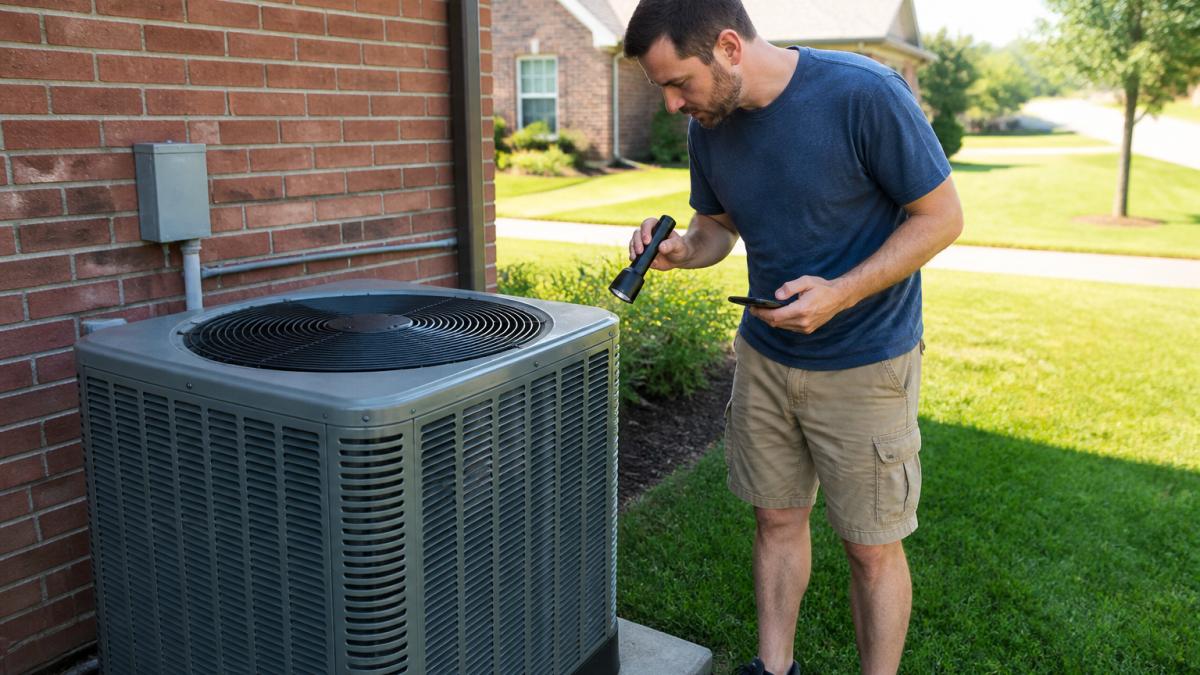
Before scheduling a service appointment, run this checklist. It takes ten minutes and can save you a service call entirely, or at least help you describe the problem clearly so the technician arrives prepared.
- Check the thermostat: Is it set to "cool," and is the temperature below room temperature?
- Replace the air filter if it looks gray or clogged. A blocked filter is one of the most common causes of weak cooling.
- Confirm the outdoor unit has power. Look for a tripped breaker at the electrical panel.
- Clear debris, leaves, and grass clippings from around the outdoor condenser.
- Check that supply vents inside the home are open and unblocked by furniture.
If nothing on this list fixes the problem, call for service. Write down what you checked and observed, that helps a technician diagnose faster, and faster diagnosis often means a lower bill.
Safety Boundaries: What Homeowners Should Never Touch
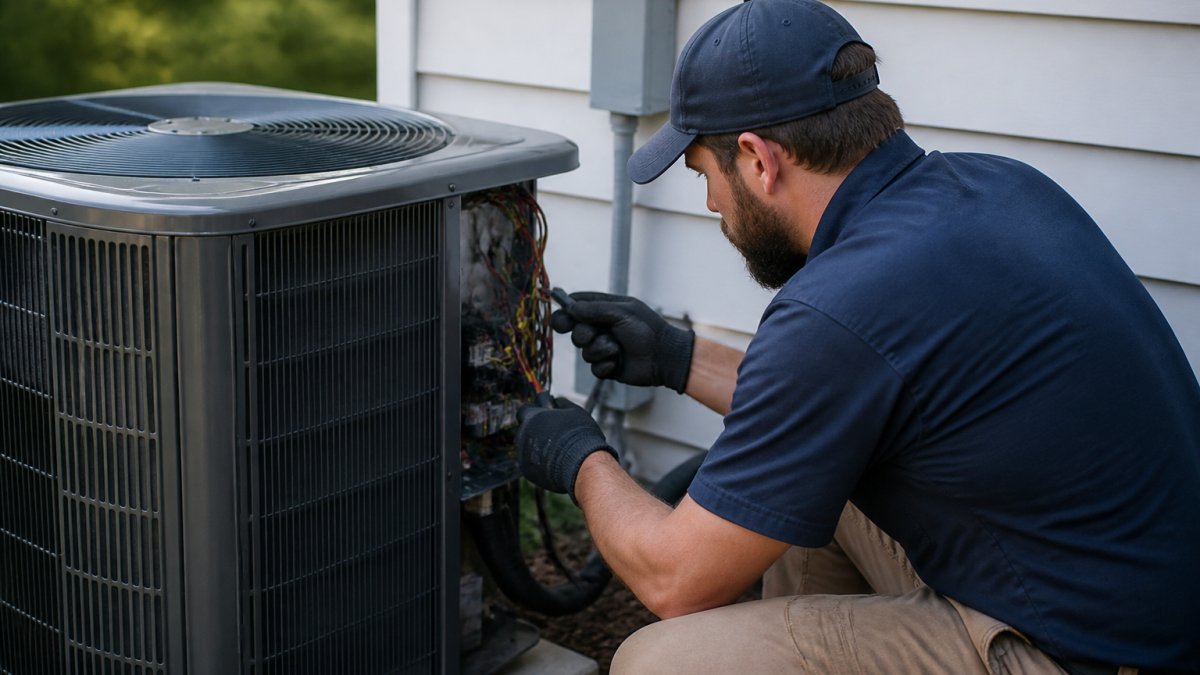
Some repairs belong to a licensed professional, full stop. Refrigerant handling, electrical components inside the unit, and gas lines are not DIY territory. Refrigerant work requires certification under EPA Section 608 regulations, and tampering with sealed systems can release regulated substances and void your warranty.
Stay on the safe side of the line: thermostat, filter, breakers, and outdoor clearance are yours. Everything inside the cabinet is not.
How to Choose an HVAC Contractor You Can Trust
Choosing an HVAC contractor comes down to three things: how they diagnose, how they communicate, and how they price. A trustworthy technician tests components and explains findings in plain language. A bad one quotes a replacement before opening a gauge manifold.
Before you call anyone, run a quick verification pass to separate a legitimate local operation from a fly-by-night one:
- Confirm the service area. Ask whether your address is inside their normal service radius. A company driving an hour to reach you may charge a trip fee or arrive late.
- Ask about licensing. Most states and many localities require HVAC contractors to hold a license. Ask for the license number and verify it where a public lookup exists; hesitation is a warning sign.
- Ask about insurance. A legitimate contractor carries liability insurance and workers' compensation coverage. If a technician is injured in your home or damages your property, insurance protects you. Ask for proof, not a vague assurance.
- Check after-hours and emergency fees. If you may need weekend or overnight service, ask the after-hours rate before you need it. Upfront disclosure beats a surprise on the invoice.
- Confirm appointment timing. Ask for an arrival window, not just a day, and ask whether the company calls ahead when the technician is en route.
Then evaluate how they work:
- Diagnostics first. The technician should test the system and tell you what failed and why.
- Clear communication. You should understand the repair options and their trade-offs.
- Upfront pricing. A reputable company explains what a repair will cost before starting work.
- Repair-first mindset. If a repair is practical, that should be the recommendation.
- Local accountability. A nearby company has a reputation in your community to protect.
This is where a veteran-owned business like Giron & Son's Heating & Cooling stands apart. We built our reputation on solid diagnostics and honest workmanship, telling you when a repair will do the job instead of pushing a replacement you do not need.
Questions to Ask an HVAC Contractor Before Scheduling Service
The right questions to ask an HVAC contractor protect your wallet and your time. Ask before you book, and note how the person on the phone responds, evasiveness now predicts frustration later.
Ask these directly:
- Can you give me a ballpark range for the repair before you arrive?
- Do you charge a service call fee, and does it apply toward the repair?
- How soon can you get someone out, and will you give me an arrival window?
- Will you explain the diagnosis before starting any work?
- Do you offer same-day or emergency repair for breakdowns?
A company that answers clearly, without dodging, is one worth scheduling. If nobody will give you a straight answer about pricing or timing, call the next provider.
AC Repair Cost Estimate: What Drives the Price Up or Down
An AC repair cost estimate depends on the type of failure, the parts involved, and how accessible the system is.
Start with the diagnostic fee. Most companies charge a service call fee to send a technician out, and many apply it toward the repair if you approve the work.
From there, the main cost drivers are:
- The failed component. Small electrical parts such as a capacitor, contactor, or relay are the least expensive repairs, cheap part, quick swap. A blower or condenser fan motor sits in the middle. A compressor is the most expensive common repair, and on an older system it can approach the cost of a new unit, making repair-versus-replace a real conversation.
- Refrigerant and leaks. If the system is low on refrigerant, the refrigerant is not the main cost, finding and fixing the leak is. Topping it off without repairing the leak means you will pay again. Refrigerant is regulated, so handling it requires a certified technician.
- Access and labor. A unit in a tight attic, crawlspace, or closet takes longer to service than one with clear access. Labor is billed by time, so a hard-to-reach system raises the bill even when the failed part is identical.
- System age and parts availability. Older units are harder to source parts for. When a part is discontinued, locating a compatible replacement or a different fix adds time.
- Time of day and season. After-hours, weekend, and peak-summer emergency calls often carry a higher rate than a scheduled weekday visit. A Friday-evening July failure costs more than the same repair on a Tuesday morning.
Because pricing varies by job, we do not quote flat rates over the phone.
One more thing: a quote dramatically lower than the others is not automatically the best deal. If one company quotes a fraction of two others for the same diagnosis, ask what is excluded, the part warranty, the labor, or the follow-up visit if the first fix does not hold. The lowest number is only lowest if it covers the same work.
AC Repair Quote Comparison: How to Spot a Fair Deal
An AC repair quote comparison is about more than the bottom-line number. Two quotes for the same repair can differ because one includes a proper diagnosis and quality parts while the other cuts corners.
| What to Compare | Fair Deal Signals | Red Flags |
|---|---|---|
| Diagnosis | Tests components, explains findings | Quotes replacement immediately |
| Pricing | Written estimate before work | Vague "we'll see" answers |
| Parts | Names the part and warranty | Won't specify what's replaced |
| Timing | Realistic arrival window | No window, no updates |
| Recommendation | Repair-first when practical | Pushes replacement only |
A fair quote tells you what failed, what it takes to fix it, and what it costs. If a quote skips any of those, ask for them before you agree to anything.
Maintenance Steps That Reduce Future Repair Costs
Maintenance is the cheapest repair you'll ever do. A system that gets routine attention runs more efficiently and breaks down less, which is why ENERGY STAR's guidance on cooling system maintenance recommends regular professional tune-ups alongside homeowner upkeep.
Do these to lower future costs:
- Change or clean your air filter monthly during heavy-use months.
- Keep the outdoor unit clear of leaves, dirt, and vegetation.
- Schedule a seasonal tune-up before summer to catch small issues early.
- Keep vents open and unobstructed for steady airflow.
- Watch your energy bills for unexplained jumps, an early sign of inefficiency.
A tune-up costs far less than an emergency repair, and it keeps your cooling performance where it should be.
Conclusion: Getting Comfortable Without the Runaround
The challenge with AC repair is trust. You're inviting someone into your home and handing them your comfort, and too many homeowners have been burned by upsells and vague pricing. As a veteran-owned company serving Monroe County and surrounding communities, we lead with clear communication, solid diagnostics, and a repair-first mindset, so you get honest answers and dependable heating and cooling service.
Get started with Giron & Son's Heating & Cooling and schedule online for HVAC service without the runaround.
Frequently Asked Questions
How do I find affordable AC repair services near me?
Start by searching for local HVAC companies with verifiable reviews and clear service areas. Ask whether they charge a service call fee and if that fee applies toward the repair. Request a written estimate before work begins. Compare at least two or three quotes for the same diagnosis. A company that explains the repair options and lets you decide without pressure is usually a better sign than the lowest price alone.
How can I tell if an AC repair quote is fair?
A fair AC repair cost estimate breaks down parts, labor, and any diagnostic fees separately. It states whether the price is a flat rate or hourly and whether the diagnostic fee is credited toward the repair. Ask what happens if the fix does not solve the problem. If a quote is dramatically lower than others, ask what is excluded. If it is dramatically higher, ask for a second opinion before committing.
Should I get more than one quote for AC repair?
Getting two or three AC repair quote comparisons is smart for anything beyond a minor fix. It helps you see whether a technician is recommending a repair that others agree is necessary. For emergency situations, you may not have time for multiple quotes, but you can still ask the dispatcher for a ballpark range and whether the diagnostic fee is waived if you proceed with the repair.
Can I troubleshoot my air conditioner before calling a repair technician?
Yes, within safe limits. Check the thermostat batteries and settings, replace a clogged air filter, verify the circuit breaker has not tripped, and clear debris from around the outdoor unit. These simple steps resolve a surprising number of calls. Do not open panels, touch wiring, or handle refrigerant lines. If those basic checks do not fix the problem, schedule service with a licensed HVAC technician.